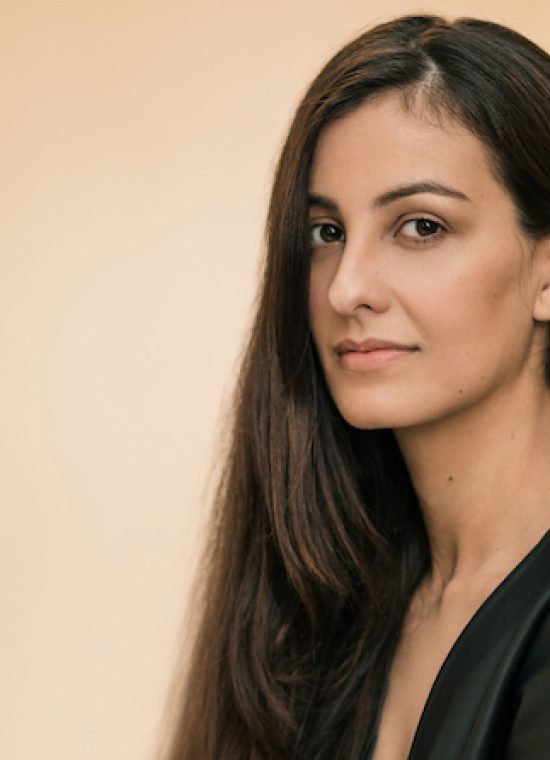
All My Languages
Ariel Saramandi on Mauritius, identity, and the languages in which she writes, thinks and dreams.

Day of the Dead is a holiday that takes place across Latin America, in particular Mexico, during the 1st and 2nd of November. Coinciding with the Catholic holidays of All Saints’ Day and All Souls’ day, it is the time of year when the dead are remembered by the living. As it is a festival as much a memorial, the event takes the form of colourful rituals, music, and the building of elaborate altars in homes and public spaces. These are decorated with crosses, statues of the Virgin Mary, photographs, mementos and sugar skulls. Offerings are made at the altars – food, drink and flowers – to draw the souls of the dead so that they might hear their loved ones praying for them, as well as telling each other family jokes and favourite stories about the departed.
In recent times, Day of the Dead has also become a date for protest. Following the murder or disappearance of dozens of Mexican journalists, editors, bloggers and writers in recent years, PEN centres around the world have begun holding their own Days of the Dead. Last year in the UK, English PEN and PEN International gathered outside the Mexican Embassy to remember all missing and murdered writers. We prepared a traditional altar with candles, photographs, bowls of water, fruit, and paper skulls; handed out mementos containing information about individual writers and read real-life case studies in both Spanish and English.
In the first six months of 2012, more writers were murdered in Latin America than in any other region in the world. Between January and August 2012, eight print journalists were killed, making Mexico the second most dangerous country in the world in which to be a writer, closely followed by Honduras and Brazil.To mark Day of the Dead this year, we’re posting poems by Mexican poet José Emilio Pacheco on the PEN Atlas. These poems will appear in PEN International’s anthology Write Against Impunity 2012, the first texts of which are released Friday November 2. The full anthology will be published on November 23, the International Day to End Impunity
This atrocious month has finally passed
And left us so many dead
That even the air breathes death
And death is drunk in the water.
I can’t resist the wound of so much death.
Mexico cannot be the plural cemetery,
The enormous common grave
Where our hopes lie exhausted.
We already drown the future
In the abyss that opens each day.
The children traffic in a new species of rats,
Ringed like lobsters and colored magenta and sky blue.
Strange flavor at firstBut since hunger doesn’t lie
We grow used to baking them.
Since you are what you eat
In less than a year
We become like them.
First their panicked little eyes, fur and tail.
Then, quickly, teeth like drill bits,
Claws like a bone saw.
(Is it necessary to say that in this regard
They didn’t have to teach us much?)
Now the children who lived off the rats are men.
They operate like hit men contracted by an invisible power
And little by little but night after night
They eliminate us with gunshots.
At twenty they told me:
“You mustSacrifice yourself for Tomorrow”.
And we offered life up on the altar
Of the god that never arrives.
At the end of things I would like to find myself
With my old teachers from that time.
They would have to tell me if
All the present’s horror truly was Tomorrow.
(Translation by David Shook)
El mes atroz ya se fue
Y nos dejó tantos muertos
Que hasta el aire respira muerte
Y en el agua se bebe muerte.
No resisto la herida de tanta muerte.
México no puede ser el cementerio plural,
La inmensa fosa común
En que yace deshecho lo que esperábamos.
Al porvenir ya lo hundimos
En el abismo que se abre todos los días.
Los niños traficaban con una nueva especie de ratas,
Anilladas como langostas y de color magenta y celeste.
Sabor extraño al principio
Pero como el hambre no miente
Nos habituamos a hornearlas.
Ya que uno es lo que come
En menos de un año
Nos volvimos como ellas.
Primero los ojitos alarmados, la pelambre y la cola.
Poco después los dientes de taladro,
Las garras como sierra de partir huesos.
(¿Hará falta decir que a este respectoNo tuvieron gran cosa que enseñarnos?)
Ahora son hombres los niños que vivían de las ratas.
Actúan como sicarios de un poder invisible
Y poco a poco pero noche tras noche
Nos eliminan a balazos.
A los veinte años me dijeron:
“HayQue sacrificarse por el Mañana”.
Y ofrendamos la vida en el altar
Del dios que nunca llega.
Me gustaría encontrarme ya al final
Con los viejos maestros de aquel tiempo.
Tendrían que decirme si de verdad
Todo este horror de ahora era el Mañana.
About the Author
José Emilio Pacheco (Mexico, 1939) is a poet, essayist, translator, novelist and short story writer; a central figure of Mexican and Latin American literature. Pacheco has been a member of the National College since 1986 and is an honorary member of the Mexican Academy of Language and has received numerous awards, including the Cervantes Prize in 2009. For Pacheco, poets are the true critics of their time. His poetry is simple, blending everyday language with irony and black humour, but it is also profound and experimental. This writing, he says, belongs to everyone, not just the author.
José Emilio Pacheco (Mexico, 1939) – poeta, ensayista, traductor, novelista y cuentista. Figura central de la literatura mexicana y latinoamericana. Miembro del El Colegio Nacional desde 1986 y miembro honorario de la Academia Mexicana de la Lengua. Ha recibido numerosos premios, entre ellos el Premio Cervantes 2009. Para Pacheco, el poeta es el crítico de su tiempo. Su poesía parece sencilla con su lenguaje cotidiano y sin ornamentos, con su ironía y humor negro. Pero es profunda y experimental. La escritura pertenece a todos, dice, no a un autor específico.
About the Translator
David Shook’s poetry, translations, and criticism have appeared in Oxford Magazine, Poetry, PN Review, World Literature Today, and elsewhere. A chapbook of his translations from the Isthmus Zaptec of Víctor Terán is available from the Poetry Translation Centre, and his work also appears in the anthologies Oxford Poets 2010 (Carcanet) and Initiate (Blackwell). His translation of Mario Bellatin’s Shiki Nagaoka: A Nose for Fiction is forthcoming Shook lives in Los Angeles, where he edits Molossus.
Additional information
You can read more about the PEN’s Case list by following this link.To find out what you can do to help, please consider joining The Rapid Action Network (RAN). This network was founded by the Writers in Prison Committee of PEN International in 1991. The purpose of the network is to alert members and supporters as rapidly as possible to disturbing developments affecting the welfare of writers and journalists around the globe, and to encourage them to respond instantly by writing a letter of appeal, taking other forms of action, and by passing the information on to their contacts.Distributed by email, each alert or ‘RAN’ gives members the confirmed facts of the case; a paragraph stating clearly what PEN’s concerns are about the case; a sample appeal; and the address or fax numbers to which appeals should be addressed. Joining the network does not mean you are obliged to respond to every RAN, although each letter can be enormously helpful in reinforcing the work we do here. However, we do ask that if you decide to send an appeal you do so as soon as possible after you receive the alert. The Rapid Action Network will also be used to bring you updates from the Writers in Prison Committee (for example, when a prisoner is acquitted) or when specific appeals arise.To subscribe to English PEN’s Rapid Action Network, please click this link.
Ariel Saramandi on Mauritius, identity, and the languages in which she writes, thinks and dreams.

Gabriela Jauregui reflects on #MujeresJuntasMarabunta

The journalist and contributor to The Sorrows of Mexico reflects on the ‘three demons’ of narco-politics, censorship and corruption, and on the future of journalism in his country.
Translator and writer Jethro Soutar reports from the 2015 Guadalajara International Book Fair, the biggest annual literary event in the Spanish-speaking world.