
In the Unlimited Confines of My Creativity, I Was Free
Hannah Branston and Ade Adedeji on art and activism.
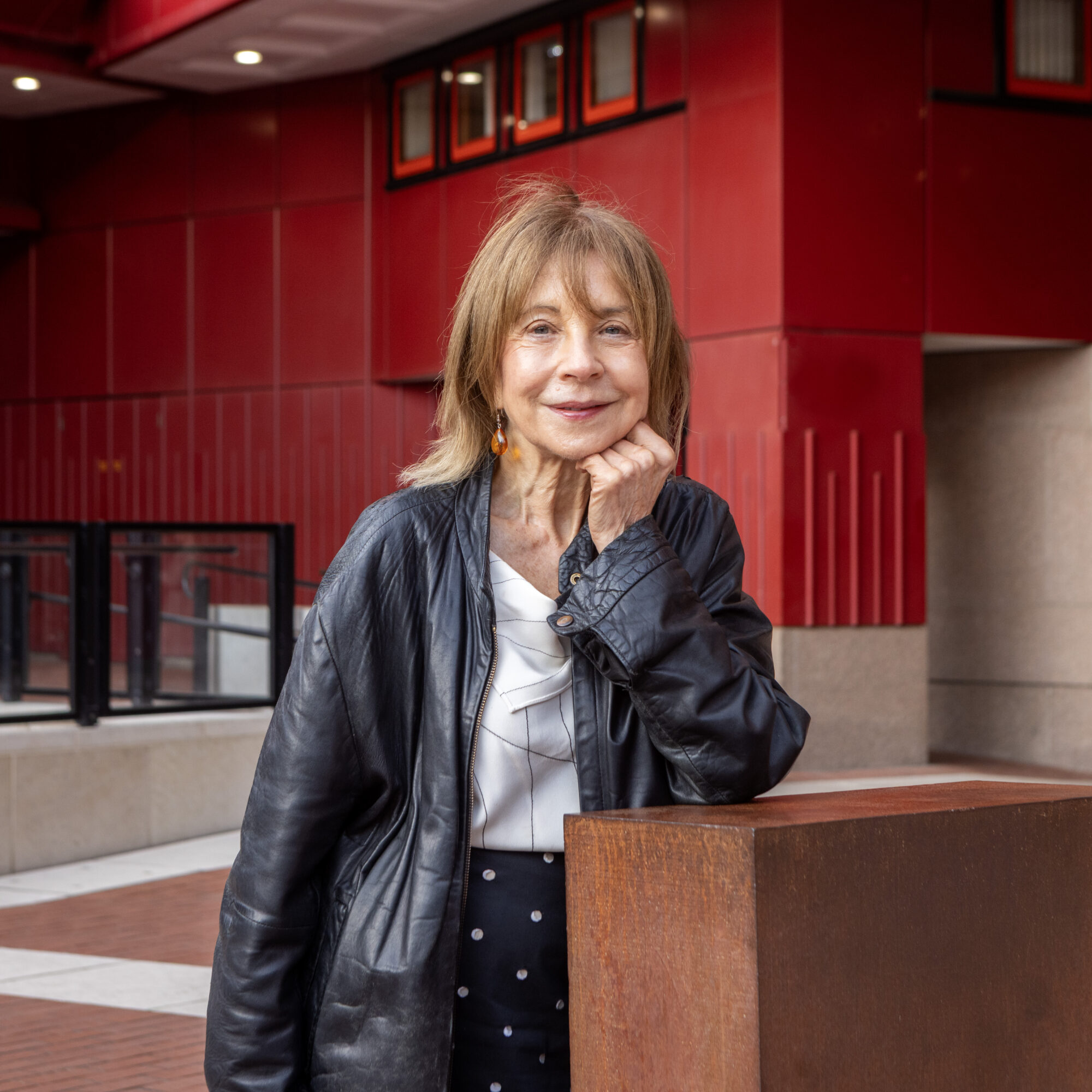
This speech was delivered at the PEN Pinter Prize ceremony at the British Library on 8 October 2026.
Let me start by saying what a great honour this is – one which I have taken some time to register as real. To say that I am moved to have received it is, to say the very least, an understatement.
Sincere thanks to the three judges, Ruth Borthwick, Chair of English PEN, to distinguished creators – playwright and screen writer, Tanika Gupta, and poet and author, Will Harris. Thanks also to Daniel Gorman, Director of English PEN, and to Zoe Sadler and Will Forrester whose guidance has been unfailing. Thanks to Helena Kennedy for her generosity and friendship, and on the issue of human rights, for being way ahead of the times. And finally to our Writer of Courage for all that he does, for being here, and for being there in every sense of the term.
This is not a time to mince words. So, let me begin by saying that I speak here, today, as a woman who is proud to define herself as a dissident Jew. Proud to be ‘dissident’ because, with the rise of autocratic regimes across the globe, the crushing of political protest and freedoms, dissidence feels like the only place to be. Proud to be a ‘Jew’ because there exists a tradition of Jewish history and thought which, over millennia, has made its appeal for equity and justice to be placed at the core of what it means to be Jewish. To cite two powerful Biblical injunctions: ‘Justice, Justice, you shall pursue,’ (Deuteronomy, 16:20), ‘Remember you were strangers in the land of Egypt’ (Exodus, 22:21, Leviticus, 19:34). For this tradition, the actions of the State of Israel currently being perpetrated against the Palestinians in my name would, I strongly believe, be viewed as anathema.
This prize is named for Harold Pinter. ‘Unflinching,’ to use his own word, he was never one to hold fire in the face of deadly political power. On the occasion of being awarded an honorary degree at the University of Turin in 2002, he listed the political silences that had spread and were continuing to spread across the globe. From the deaths of hundreds of thousands of children deprived by US sanctions of life-saving medicines in Iraq, to the killings, now mostly forgotten, that had unfolded in 1970s Latin America, from Nicaragua, to Guatemala, and El Salvador. But he ended with ‘the desperate plight of the Palestinian people’ as ‘the central factor in world unrest [which] is hardly referred to.’ ‘Central’, the key to ‘world unrest’, ‘desperate’ and ignored. ‘What a misjudgement of the present,’ he concluded, and ‘a misreading of history this is.’
That was close on a quarter-century ago. We can only imagine what he would have had to say now about the genocidal atrocity being inflicted on the Palestinians for whom the spectre of freedom has never been so frail and fades by the day. Pinter was in good company. On 4 December 1997, in what became one of his most iconic statements, Nelson Mandela had insisted: ‘We know too well that our freedom is incomplete without the freedom of the Palestinians.’ Palestinian self-determination becomes the litmus test for the future of world freedom. In which case, if we look around us now at the debris of the future, it is a test at which the entire world has drastically failed. We now wait to see if Ed Miliband’s House of Commons speech, delivered on 8 September, its principles repeated loudly at the Labour Party Conference, will be the breakthrough moment it so urgently needs to be. Even while, I think I can say with tragic confidence, we already know it will not be enough.
In late May 2025, more than a thousand Israeli academics signed ‘An Urgent Call to the Heads of Academia in Israel,’ urging them ‘to act immediately to mobilise the full weight of Israeli academia to stop the Israeli war in Gaza.’ The signatories continue: ‘We cannot claim that we did not know. We have been silent for too long.’ The institutions of higher education in Israel, must ‘call things what they are – unspeakable actions being done in our own name, with our own hands.’ Note the logic of this argument. If we do not speak out, if we fester inside a willed ignorance, then ‘we’ – which means every single higher academic inside Israel and by implication many more – become guilty, complicit in unspeakable crimes: ‘in our own name, with our own hands’. I don’t think ‘with our own hands’ was intended metaphorically.
One of Pinter’s strongest drives was to strip bare the presiding lies of the time. His Nobel Prize acceptance speech of 2005 opened with views on art and politics he had first penned in 1958. An ugly, violent, expansive regimen of power boasted its ‘civilised’ virtue, at the same time as laying a type of gauze across the world, making it almost impossible for the political reality to be seen. That is why, I think, so many of his plays involve a domestic space, often of misleading banality and calm, where something slowly crawls out of the woodwork, leaving everyone standing exposed as who they truly are. His work lifts the lid on the myth of middle-class conformity, comfort and safety, rampant in the 1950s, shadowed by the encroaching Cold War. This too was the time of the nascent state of Israel, which was founded in 1948 in what Israel describes as the ‘War of Independence’ and Palestinians ‘The Nakba’ or ‘Catastrophe,’ as indeed it turned out to be. It was through this lens that I first saw the world. I was born in 1949, the year that the temporary, cruel and unsteady armistice lines were laid down between Israel, and Egypt, Jordan, Lebanon and Syria. I think that makes of me a child, a reluctant child, of Israeli statehood as one might say.
Although Pinter contrasts political theatre with the subtleties of creating complex dramatic characters, the overriding principle remains the same. The characters must be given the freedom to go ‘which way they will.’ They must be allowed ‘to breathe their own air.’ His job was not to impose on them a ‘false articulation’, not to force a character ‘to speak where he could not speak’, make him ‘speak in a way he could not speak,’ ‘make him speak in a way he could never speak.’ ‘As if, every time he put pen to paper, he was releasing an entrapped soul. Re-reading his works for today, delving into less familiar terrain, I started to notice more than I had registered before just how far oppression and injustice are his key. Hence, indeed, that first play, The Birthday Party, staged in 1958. For all its celebration – a party endlessly anticipated but never seen on stage – the play ‘collapses’ at the end, to use his words, into ‘a single act of subjugation,’ as the birthday boy is carted off who knows where.
Lady Antonia Fraser will correct me, but it seems to me that the role of theatre in countering injustice becomes more and more explicit. Two short later plays that particularly struck me. Mountain Language of 1988, where a woman, in what seems to be a police state, is barred from the use of her Indigenous tongue. And Ashes to Ashes of 1996, where an abused woman, possibly drowning, narrates the terrors of her life, including the sight of screaming babies being torn from their mothers’ arms, while a man who listens clamps his hand over her mouth and around her throat.’
Of one thing I am sure. Were Pinter with us today, even as the war on Gaza fades from the front pages, in fact the more it does so, he would never have stopped calling out our accountability for Palestine. Just when you allowed yourself to think, if only for a split second, that the situation could surely not get any worse, the rulers of Israel manage yet again to excel themselves. Today, the Israeli government has the blood-soaked temerity to ask Trump to support the illegal, forced displacement of every single Palestinian remaining in Gaza. With deadly precision and barely concealed glee, Israel’s Minister of National Security, Itamar Ben-Gvir has specified 250,000 Palestinians to be removed in the first year, followed by the rest of the roughly 2 million remaining over the next six years (though ‘ethnic cleansing,’ let alone ‘genocide,’ never enters the official pronouncements of Israel as state). In fact Ben-Gvir is on the path to fulfilling a longer-term plan for Palestine, drawn up in 2017 by Bezalel Smotrich, radical settler in charge of the West Bank, before he became Finance Minister. The Palestinians are faced with three options: to live under Jewish supremacy while ceding all national claims; to leave the territory; or, for any who resist, to face deadly suppression by the Israeli military. A capacity massively inflated by Trump’s approval of a $2.8 billion arms sale to Israel a few weeks ago.
Crucially, in today’s plan, not a trace of what once was Gaza will remain. What was Gaza, to which I must add, as many Palestinians continue to insist, what was Gaza and always will be – despite the expulsions, the carnage, the rubble of the city. This is where hope, if only a sliver, takes shape. Something new is being crafted, every time someone lives to see another day, to tell the tale, refuses to give in. ‘Telling the tale’ is of course a crucial part of the story. To echo the world-wide project of PEN who host us this evening in their fight for freedom of expression, we might take just one glaring example of creativity in the face of raw censorship: film-makers Yuval Abraham and Rachel Szor being threatened with loss of citizenship, and with their lives, for their film, NAZA, which records the voices of 24 Israeli intelligence officers and soldiers, as they describe the policy of precision mass remote killings in the war on Gaza, including targeted civilian casualties. Some express shame, some indifference, others are proud to boast.
Abraham and Szor are artists. Cultural struggle in the name of justice and freedom is their terrain. Which brings us to this evening’s Writer of Courage, with whom I share this prize, a special honour not least as he is the first Palestinian to win this accolade. As well as writing short stories based on his experience, he is playwright, mentor, actor, and director with Ashtar Theatre, which is famous for its prize-winning Gaza Monologues, first staged in 2010, which continue in their repertoire to this day, and have been translated and distributed across the world. Please welcome this year’s Writer of Courage, Ali Abu Yasin.
The Ashtar Theatre describes itself as an art-based framework of justice, an archive, and counter-weight to the threat of erasure and the failings of international law. Ali Abu Yasin has built a network of workshops aimed at strengthening the new generation’s mental health. His plays have been banned, he has been prevented from travel, but he never stops. He lives in the al-Shati refugee camp, one of the largest refugee camps in Gaza. He knows all about perishing and survival. Crying out for justice, he knows what it means not to survive, and yet somehow to survive as he constructs his vision of hell and creativity, drowning and performing, that is his life and the life of his family and everyone inside Gaza today.
Like Pinter, Ali Abu Yasin is a dramatist and storyteller, ‘unflinching’ both. For the rest of our time, I want therefore to pay tribute to the skill and courage of what he writes. Listen to how death comes alive: ‘When you feel that death is storming you, raping you, threatening your existence, imposing on you and your family – the family you have spent your entire life sacrificing for – this is something that no one can bear. I must live, defy death, stay alive … But how do we survive this amount of hellish lava that is thrown at us from the sky.’ Even the sea is ‘no longer what it once was’: a symbol of freedom and play which is now ‘a site of horror.’ How to raise children, how to be a child, in such a world? Parents either want their child ‘to grow rough’ so he will not break, or flexible ‘so the child does not turn into stone.’ ‘Every time I hear a child wishing to die,’ writes another voice from the Gaza monologues, echoing a plaint which stretches across the length and depth of the land, ‘everything in me dies.’ Ali Abu Yasin travels into the core of grief. A mother wanders the camp hallucinating her slaughtered child; another woman, paralysed in the war and something of a cause célèbre in the community, becomes a voluntary mute.
In such conditions, he writes, death is not merely ‘the cessation of physical movement, but an attempt to rob one’s spirit and hope, imposing a life beyond human endurance.’ Note that reference to spirit. According to the 1948 Genocide Convention, for an act of war to qualify as genocide, the intent must be to destroy ‘in whole or part a national, ethnical, racial or religious group.’ As far as a I am aware, the Convention does not mention ‘spirit.’ But I think we can fairly say that those who quibble over the wording in an attempt to bypass its meaning clearly have not reckoned with the spirit and mettle of the likes of this year’s Pinter Writer of Courage, Ali Abu Yasin.
Against all odds, he insists that optimism has its place, not as ‘a denial of reality but a conscious stance to confront it.’ In Gaza, he writes, optimism is not ‘an escape from pain, but an energy that urges people to hold on to life … We refuse to be silently erased.’ ‘I am still here and I will continue to keep dreaming.’ Most often, dreaming is cast out of the zone of politics and assigned to the unreal world of imagination. Here, it becomes one of the few remaining places where a viable future might be found.
Ali Abu Yasin never wavers. Writing remains his appointed task. After one of his most disturbing accounts of escaping bombs and snipers in a storm, rain pounding on families fleeing death on the move, he somehow makes it back to his home and sits at his desk in his house, which is still barely standing, miraculously, amid the rubble. He starts to write. His task is to capture such moments before they ‘dissolve’ into the gathering noise. Writing is oxygen – ‘If I don’t write, I suffocate. I write to remember that I’m alive, and to leave a trace for the generations to come.’ He is not alone in questioning whether, when this war surely ends, he will find the courage and strength to call himself human again. ‘We are no longer the same as we were.’ ‘Building a human,’ he writes, ‘is far more difficult than rebuilding a structure.’ ‘I believe that everyone living in Gaza is now different from the rest of the world.’ Try to remember, he pleads, ‘that there may be something called “knowledge”.’ To cite Harold Pinter’s words again: ‘What a misjudgement of the present and a misreading of history,’ for the world to think it could forget or ignore Palestine.
This is writing that bears witness to itself. As if Ali Abu Yasin wants to take, or rather accompany, his readers, actors and co-writers beyond the limit of human endurance, and then stop – almost, right on the brink – when they reach the edge. Or, to put it more simply, he really takes you there: whether you’ve already been there, got out, have barely survived, or whether – to go back to where I began – in person or in heart and mind, you should have been, or should be, there. How to create empathy with a suffering people when the brute conditions they are living under mean there is almost nothing of the human being left? When one hears the term ‘Writer of Courage,’ what most easily springs to mind is a writer who has been banned, censored, imprisoned. Ali Abu Yasin has been banned. He has watched cultural venues razed to the ground. But in the end what strikes me is what he does, and what he makes us do with, his words. His life and work are testimony and object-lesson in the writing of disaster. If such writing does not merit the title ‘Writer of Courage,’ then I, for one, have no idea what, or who, possibly could.
Jacqueline Rose is internationally recognised as one of the most important living feminist critics for her writing on literature and psychoanalysis, Israel/Palestine, and South Africa. She is co-director of the Birkbeck Institute for the Humanities, co-founder of Independent Jewish Voices UK, a Fellow of the British Academy and of the Royal Society of Literature. Her books include The Haunting of Sylvia Plath, States of Fantasy, The Question of Zion, Women in Dark Times, Mothers: An Essay on Love and Cruelty, On Violence and On Violence Against Women, and The Plague: Living Death in Our Times. Two Women, a novel based on the Jewish philosophers Edith Stein and Gillian Rose, will be published later this year.
Hannah Branston and Ade Adedeji on art and activism.
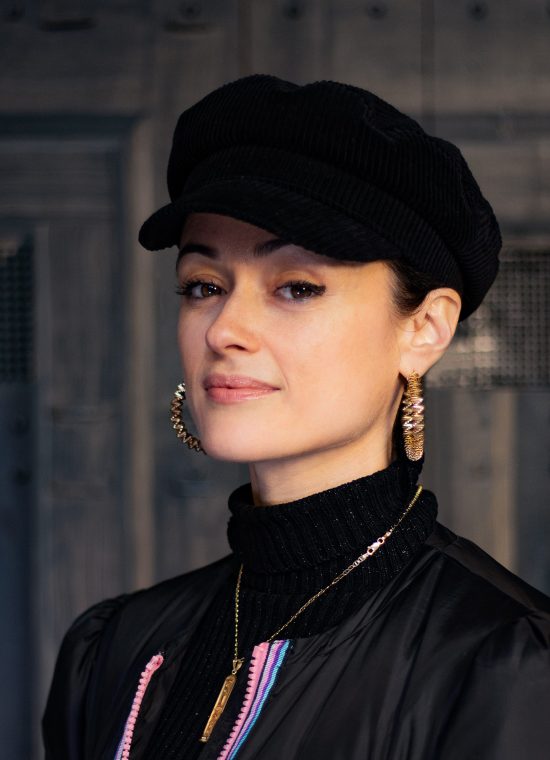
Sabrina Mahfouz's 2025 PEN Pinter Prize encomium.

Stella Gaitano, PEN Pinter Prize Writer of Courage 2025.

Leila Aboulela's PEN Pinter Prize 2025 speech.