
Stella Gaitano’s PEN Pinter Prize Writer of Courage 2025 Speech
Stella Gaitano, PEN Pinter Prize Writer of Courage 2025.
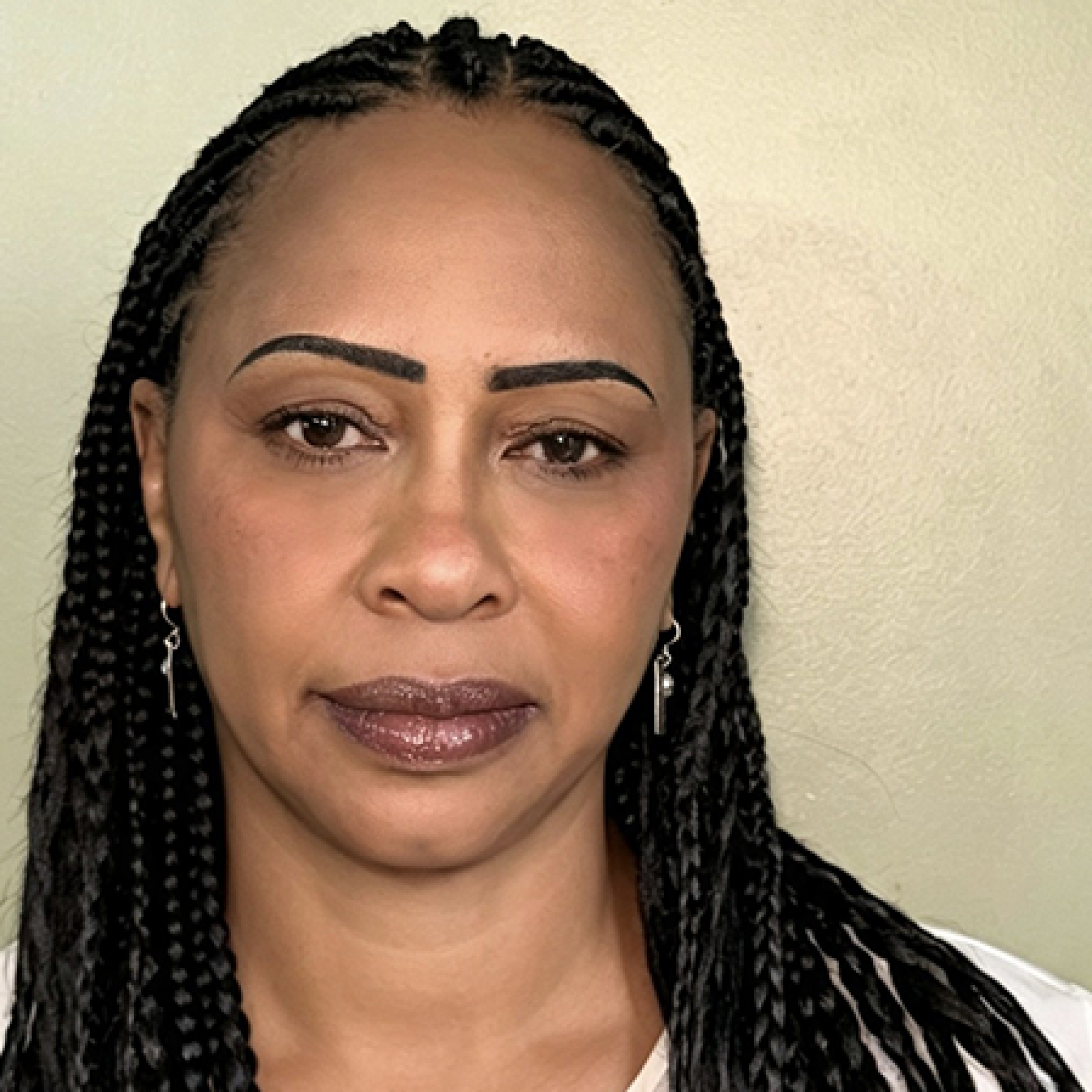
This piece is published in partnership by English PEN and PEN Sudan, commissioned as a part of ‘Sudanese Cinema, 1964 Onwards’, a film programme in London running 3–7 September 2026. ‘Art & Allegory’, which brings together four short films that use experimentation as a form of political critique, at Curzon Soho on 4 September will be followed by a discussion based on this piece between Amal Akasha and Dinan Al-Asad.
‘The Rope’ (‘Al Habel’) and ‘Jamal’ (‘A Camel’) by Ibrahim Shaddad, and ‘The Tomb’ (‘Al Dhareeh’) and ‘The Station’ (‘Al Mahatta’) by Eltayib Mahdi, screened at ‘Sudanese Cinema, 1964 Onwards’ in London, are by two pioneers of the second generation of Sudanese cinema. Shaddad and Mahdi’s careers began in the 70s and 80s, when they worked within the Cinema Department of the Sudanese Ministry of Culture. Together, they founded ‘The Sudanese Film Group’ in 1989. It lasted just two months before Al-Bashir’s coup, after which censorship and repression became the norm.
All cinemas in Sudan were shut down; they remain closed to this day. In a radio interview at the time, Shaddad said that “Sudanese cinema had not died but had been killed”, a statement whose mere utterance represented a threat to his life.
‘The Rope’, ‘Jamal’, ‘The Tomb’ and ‘The Station’ are considered films of resistance against oppression, poverty, and social injustice; because direct statements posed a danger, the use of symbol became necessary to signal objection. These works construct their narrative in the absence of speech, rather than its presence.
The opening of ‘The Station’ consists of an image with no dialogue. The film’s events unfold over roughly a quarter of an hour, during which time the director addresses the crisis of urban development that fails to benefit residents of a village. It is revealed through the movement of camels on a paved road, followed by the appearance of a group of people carrying a sick child, walking as they wait for transport to the city. The point, here, is the voices of those who are marginalised – the margin of the paved road, alongside the persistent dream of achieving passage, embodied in the tin cars that children make and play with by the roadside, a symbol of a dream of a better tomorrow and of change that is inevitably, surely, coming.
What Mahdi does in ‘The Station’ is akin to ellipsis in a novel, where the writer deliberately withholds direct explanation and leaves the reader to infer meaning from a small act or detail. The film omits narrative explanation and replaces it with a visual detail: cars are everywhere, yet they fail to perform their intended function. It is what a novelist does when describing feeling and place: describing an empty room, instead of writing “I am alone.”
In ‘Jamal’, Shaddad employs silence alongside the sound of a machine, focusing on image and lighting, the contrast between light and dark, and the expression of freedom versus submission and surrender. The film is a meditation on the perpetual conflict between untouched nature and civilisation, and the encroachment of urbanisation upon wildlife.
‘Jamal’ relies on a language of silence to narrate its story – simple on its surface, profound at its core, especially in its ending, with the camel’s surrender to an inescapable fate. This film is an example of the kind of allegory exemplified by works such as Kalīla wa-Dimna and Orwell’s Animal Farm. Shaddad gives the camel overlapping symbolisms – including as a symbol of the human being who works as though he were a cog in a machine. In the novels, this identification between animal and human is built through deliberate description and narratorial commentary that guides the reader toward a symbolic reading. In the film, it is built through the visual movement of a newborn camel freely riding on its mother’s back, and its later confinement in captivity in a pen among poultry; the contrast is articulated through a cut scene, and not through a descriptive sentence.
Though Shaddad denied that ‘Jamal’ was symbolic, stating in an interview that the film is direct and expresses human suffering, and animal suffering, judgment belongs to the viewer, not the director; as a writer, I have grown accustomed to leaving readers room to understand and interpret.
‘The Tomb’ runs for approximately 17 minutes, during which Mahdi explores the rise of extreme Islamist currents and people’s susceptibility to superstition and religious exploitation. Mahdi opens the film with African folk music built on wind and percussion instruments, without neglecting the faint sound of the desert alongside it. The film is not entirely without dialogue, but it is sparse; the film’s principal language is an explanatory silence grounded in visual expression. To draw another novelistic comparison, ‘The Tomb’ builds its narrative as some writers build from an epigraph. Like placing a proverb at the start of a chapter, Mahdi weaves the entire plot of ‘The Tomb’ from the popular saying ‘we are buried together’; the proverb is not a frame for an already existing story, but the very seed of the plot itself.
Sound in Shaddad’s ‘The Rope’ is the link that connects two men and what happens around them; both protagonists are blind, and sound alone is their window onto the world. Sound embodies the omniscient narrator, who knows what the characters do not (the massacre occurring beyond the reach of their awareness), while we, the viewers, share that same limited awareness with the characters. We know no more than the character herself knows.
These four films display how when cinema abandons dialogue it does not lose its narrative tools, but rather translates them: novelistic ellipsis is answered by the cut of montage; linguistic symbol is answered by visual symbol; interior monologue is answered by facial expression; the omniscient narrator becomes the ambient soundtrack.
In discussing these films and their role in resistance, we must address the many risks faced by Sudanese writers and filmmakers. Since the coup, these have included the strict censorship of books, scripts, and screenings; the closure of cinemas; and the continuous persecution of artists, which drove directors such as Ibrahim Shaddad to halt production for many years (despite influential early works like ‘The Rope’ and ‘Jamal’), and led to the emigration of many cinematic talents in search of space for expression.
A brief, relative opening occurred after the December Revolution, between 2019–2023, allowing the return of some cinematic activity and independent initiatives such as the Sudan Film Festival. But this opening remained fragile and individual. Then came the war, which caused the direct destruction of cultural infrastructure, the forced displacement and exile of writers and directors, and posed a real danger to the lives of those who documented violence and wartime atrocities.
Despite all these challenges, Sudanese literary and artistic production has not stopped; filmmaking has continued to be practised not because of state support, but despite its lack. And now the names of young directors have emerged whose films have managed to compete in international festivals; through our art, we will continue to tell them: you cannot silence us.
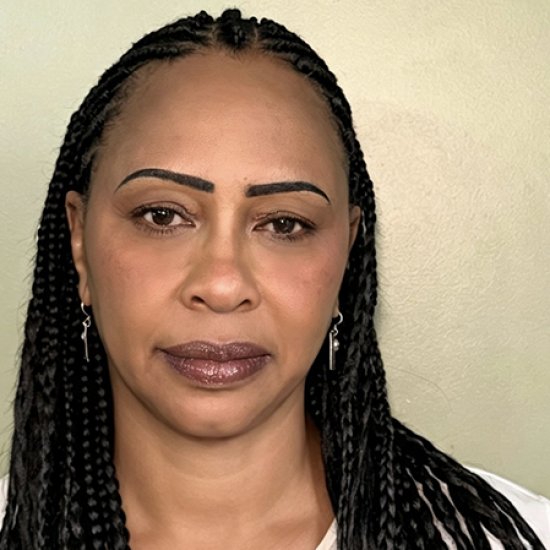
Amal Akasha is a Sudanese author based in Leeds. She has published two novels in Arabic, Elaajba Mill and The Pit, with a third, The Midwife Hayat, currently in progress. As a member of English PEN and a co-founder of the PEN Sudan initiative, she is dedicated to promoting Sudanese literature and advocating for freedom of expression.
Stella Gaitano, PEN Pinter Prize Writer of Courage 2025.

Leila Aboulela's PEN Pinter Prize 2025 speech.
Ali Abu Yasin's PEN Pinter Prize Writer of Courage 2026 speech. Translated by Sawad Hussain. Delivered at the British Library.

Elhum Shakerifar on The Conference of the Birds and the Global Sumud Flotilla.