
The Future Will Be in Our Image
Elhum Shakerifar on The Conference of the Birds and the Global Sumud Flotilla.
This piece was commissioned by Charleston and English PEN for “A Matter of Conscience”, an event at Charleston Festival 2026 on 16 May 2026, with Reni Eddo‑Lodge, Alice Oswald and Ahdaf Soueif.
What is the difference between Conscience and Imagination? It’s like sorting the air from the wind. Both are invisible. Both are accessible to everyone but easily ignored. In ancient times they appeared as ghosts or birds. Now they are hidden in the depths of the Self. It takes solitude to find them and yet miraculously, they contain insights about others.
In the syntax of both, there is ‘AS’. ‘Do unto others as you wish they would do unto you!’ says Conscience. ‘As I feel pain, so might others’ says Imagination. Who invented AS? It came before Conscience. It is that sixth sense of similarity which drives Imagination. As one thing, so another and another…
Imagination is boundless. It is a Place of Supply. Conscience attends to limits. It makes rules for the Place of Scarcity. Conscience divides fairly and judges those who take more. Imagination conjures a vision then generously steals from it.
Conscience without Imagination is constrained by character. Sometimes it is shrill, self-righteous, furious, sometimes equivocal. Imagination without Conscience decays into fantasy. As the pressure mounts, who will risk the delays of weighing one against the other, which is called thinking?
Conscience (according to Hannah Arendt) is a side-effect of thinking. Poetry is a side-effect of imagining. Does that make poetry the aunt of the Conscience? Can poetry hold Conscience to Imagination?
Conscience is an interlude. Imagination is a prelude. Conscience resists unfairness. Imagination resists shallowness. Conscience cross-questions the self. Imagination listens to the selves of everything.
So these two aspects of the mind go about their business – often in agreement, occasionally in dispute. Imagination refuses to close a question, refuses useful definitions. Conscience, having laboured to find certainty, is quick to act. When it comes to action, Conscience is strategic, Imagination is intuitive. They argue endlessly. Under the delicate system of their hopes and disagreements, human thinking continues.
But it happens sometimes that a third element intrudes upon this system: Fear. With a newsflash, with a stirring speech, Fear disables the mind, divides Conscience from Imagination, beats down, defunds, trivialises poetry, which is the engine of AS – the very syntax of thinking. We are lucky that Fear has not hidden herself in our time, but has written her name on the UK Terror laws, our modern equivalents of the witch trials. Just as the suspect witch could be tried by ducking and if she drowned she was innocent, if she survived she was guilty – so the terror suspect can be punished by process: imprisoned without trial for fifteen months, wrestled to the ground, denied her letters, her books, her religion, handcuffed to a male officer when she needs the bathroom, isolated from her family. These abuses (all of which were documented against the Filton 24) drove Qesser Zurah to go on hunger strike. When it was mentioned that she might die, our MPs, like a crowd at a witch-ducking, laughed.
At this point, if the poet doesn’t protest, she will lose her job.

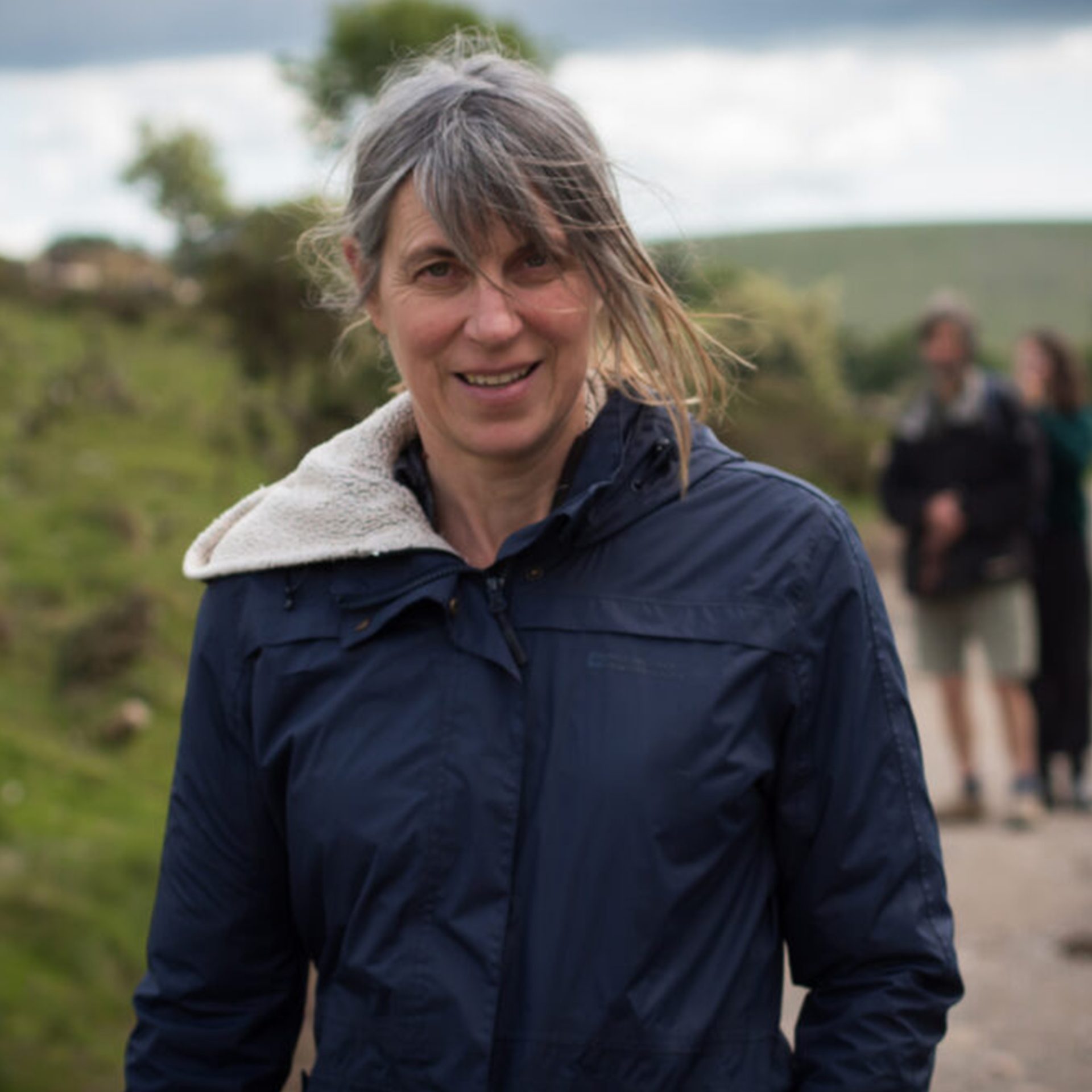
Alice Oswald studied Classics at Oxford and then trained as a gardener. She worked in gardens for seven years before publishing her first book of poems, The Thing in the Gap-Stone Stile, followed by the acclaimed poem Dart. Other collections include the acclaimed Weeds and Wildflowers, A Sleepwalk on the Severn, Falling Awake and Nobody. She has won the Ted Hughes Award, The Forward Prize (twice) the T. S. Eliot Prize (twice), the Costa Poetry Award and the International Griffin Poetry Prize.
In 2009 she won a Cholmondeley award for her contribution to poetry. She was the Oxford Professor of Poetry between 2019 and 2023. She is married with three children and lives in Devon.
Elhum Shakerifar on The Conference of the Birds and the Global Sumud Flotilla.

Reni Eddo‑Lodge on what it means to write with and from conscience.
Ahdaf Soueif on what it means to write with and from conscience.
English PEN’s annual PEN Lecture delivered by Max Porter on 29 April 2026.