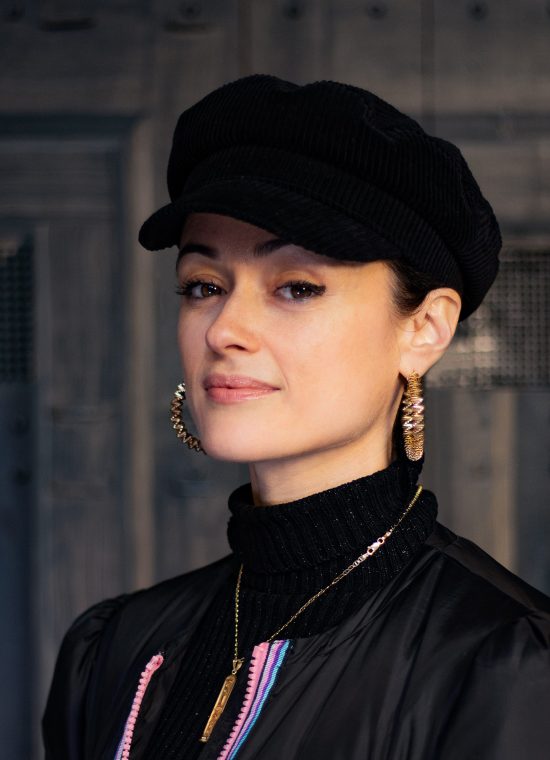
Between Worlds: Sabrina Mahfouz’s Encomium for Leila Aboulela
Sabrina Mahfouz's 2025 PEN Pinter Prize encomium.
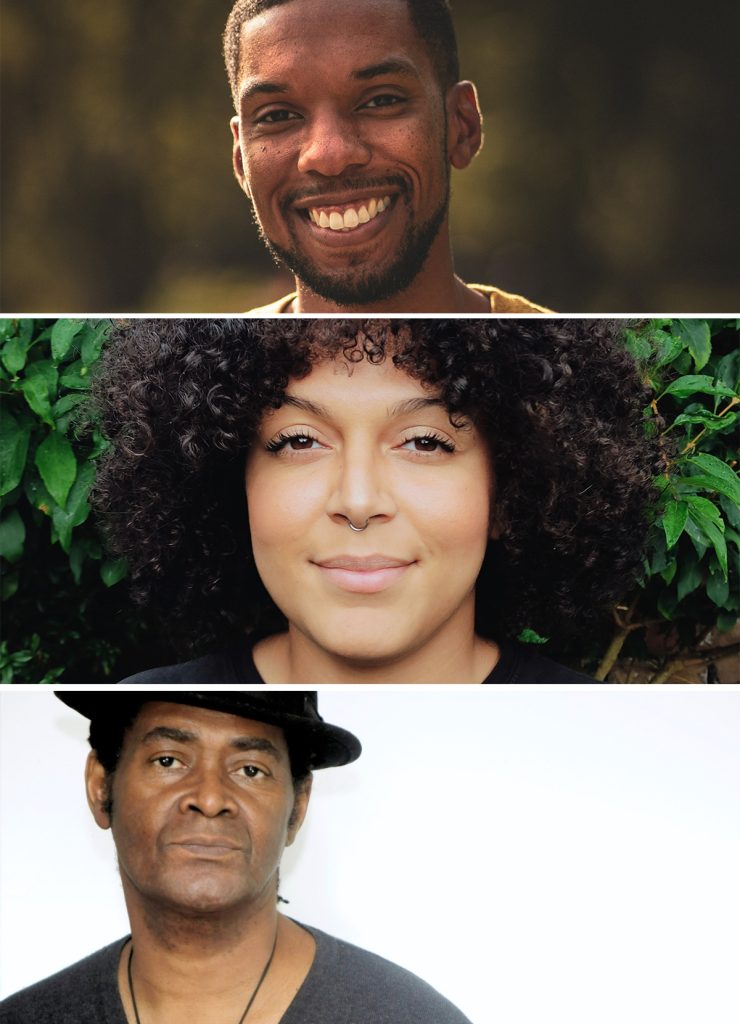
This piece is in partnership with the Jhalak Prize, awards that seek to celebrate books by writers of colour in the UK and Ireland. It is part of a mini-series to mark the 10th anniversary of the prize.
HEATHER MARKS: Hi Jacob, hi Ashley – it’s great to be speaking with you both. As writers at different stages of your careers who have had varied roles within the literature landscape – how do you feel you have changed as writers, and how are you still the writer you were when you started out?
JACOB ROSS: That’s a great question, I was thinking about that last night. I grew up under a dictatorship, in the 1960s and 70s in the Eastern Caribbean, Grenada. And if you know anything about Grenada, you know it was invaded by the Americans, not very dissimilar to what happened to Venezuela recently. That experience was quite seminal in my understanding of society, poverty, and women in society (having grown up in a massive extended family where there were hardly any men), and these themes persist. They haven’t changed in any fundamental way. What has changed for me is that I moved to England, and an examination of the society struck me quite hard. It’s something that Salman Rushdie says – when Britain left the colonies, they didn’t simply leave the colonies, they took the colonies with them. That was his way of explaining the kinds of racism, institutional barriers, and attitudes that we encounter. The whole superstructure was always there, and the colony is still here. So, I still find myself addressing that in my writing and being immensely preoccupied with it.
If there’s been one big change, it’s something I did completely arbitrarily with my book that won the Jhalak Prize. I wasn’t previously interested in crime fiction as a writer; I was interested in it as somebody who reads and enjoys people beating other people in books sometimes. But I was challenged by a student in my class because I made a bold claim that if you understand the structure of novels, you can write in any genre – and so she challenged me to do it. We didn’t have crime fiction in the Caribbean to any large extent, so, I never expected to get any kind of acknowledgement for my involvement in crime fiction. I was always seen, and I’d always seen myself, as a literary writer in the sense that I write the kind of things associated with African Caribbean writing. So, that represented a massive turnaround for me.
HM: I love what you’re saying around the purists getting upset now that you’re writing in this genre, because there’s so much of that around now. Just being writers of colour in any genre, when you bring yourself into it, that upsets them.
JR: Yes, if you are to address any type of English writing, or what people refer to as English writing; be it a form, be it fantasy, crime fiction, whatever it is. If you’re serious, as a writer, you have to look at what it’s telling you, where it’s come from, its tradition, what are the assumptions (and so many of them are still racialised assumptions that you encounter in the writing). You have to ask very hard questions of this form, because it’s not yours. It’s not mine. It’s not even theirs, frankly speaking, because the English and the Europeans claim to have invented the novel, but they didn’t. The Chinese did, in 1610. That, again, is quite controversial, but what I’m getting at is that for me, I cannot, as a writer, simply adopt wholesale the English idea of the novel, or indeed of a short story. It’s a denial of so much. It’s a denial of our own narrative traditions, and the way we tell stories. It’s a denial of the authenticity of our articulations. It’s an acceptance, which I don’t accept, that there is only one narrative tradition in the world and it’s a Eurocentric one. That’s not true.
ASHLEY THORPE: I think there’s a lot of crossovers for me. The difference is I’m very early in my career, so I’ve got two published books out now, and they were back-to-back 2024/25. I am a child of immigrants – my grandparents moved from Jamaica, rather than Grenada, in the 60s. I was born in the late 80s. My parents decided to raise me and my brothers in an area of Nottinghamshire that was outside of the city centre. For whatever reasons, they thought it would be better to have us out of the city, so we grew up in a suburban/semi-rural space, which was incredibly white. And while I had the freedom and the imagination to play, and I still had the connection with my cousins who were in the city centre, we grew up in a space where we encountered a lot of racism, and we weren’t quite equipped for it. So, when I think about my earliest writing, as a child, a lot of my characters were what I was reading, it was all white children. I was never centring myself in a story.
It wasn’t until I was about 8 years old that I found out Malorie Blackman existed and was finally able to see myself in books. But in the books that I was reading often, especially in the fantasy genre, I would never see characters like me, so that’s what I would write. As an adult now, I’ve maintained the imagination and continued to write, but the big difference is making sure that I’m centring characters of colour. I write for the middle grade space, but the thing is, I’m also writing for myself as an adult so I can pass on a lot of the things that I’ve learned, and wisdom I think I’ve gained in my lifetime. It’s also to make sure there is a mirror for kids, who, like me, enjoy fantasy stories and letting their imaginations run wild, but are not able to see themselves. So that’s why I specifically centre Black children in all my fantasy stories. Also, similarly to what Jacob was saying about the Eurocentric-ness of writing here – the fantasy genre is terrible for that. It takes a lot to try and break down certain boundaries in that sense, especially in a demographic where it’s parents that buy books, not the kids. People bring their biases to that as well, so it is harder to have Black kids on the cover of a book in Waterstones. People will make their assumptions, and they’ll go for what they see as safe, and often that safeness is not black characters.
It was so imperative that I wrote about what I really wanted to see in the literary space. That kids were deserving of heroes in fantastical spaces, not just in ‘urban’ situations or whatever the industry likes to call them. It was important to me because I didn’t really have that, and I want kids to have that now.
My first book, The Boy to Beat the Gods, was a fantastical version of pre-colonial Nigeria, and it delved into the lore of the Orishas – for some publishers, this would be seen as a risk, really. My second book, Spirit Warriors, is a fantastical version of a Jamaica where Maroons fought off the British with magic. Again, a big risk, and I don’t think it would have sold if I had gone with that as my first book. My writing is really this fine balance of putting things out there that I know kids are going to enjoy with adventure and action, with real histories and mythologies hidden in them. Hopefully, kids will be so enthralled with the story that they’ll want to go off and study about these things themselves as well.
I’m glad I’ve got published work now as a late 30-something, rather than in my early 20s because I feel like I’m a more rounded person, and I think that gives the writing a lot more of an emotional core.
JR: Ashley, I have two children who were born in this country. They’re adults now, and I’ll tell you this – when they were growing up, I wish there had been writers like you writing about characters with which my children could have identified. It’s one of the great problems that parents had, especially those of us raising children in the 80s and 90s, had: trying to locate books for our children where they see themselves on the page. I’m not saying this in any political way at all. In a way, it’s telling them, ‘You don’t matter,’ or it’s telling them, ‘You’re not there, you don’t exist.’
That’s why writers like yourself are so important. You’re strategic and you represent a very important cultural and psychological intervention. And, it is political in that sense, not because you are being political, but because for these generations in minoritised groups in this society, you’re giving them a sense of worth, a sense of value. A lot of how we perceive ourselves is to do with the stories we are told. Stories represent the cement of civilisation. We all tell stories, even if it’s a newscast, even if it’s a debate; that’s a narrative, it’s a story. So, I do recognise, and you don’t have to necessarily accept this, but I recognise the central strategic aim of writers like yourself.
HM: It’s interesting what you say around risk Ashley, because I was thinking about how writers of colour are seen as risky in publishing. I’ve been writing from a very young age and I’m now in my early 30s. I think of some of the young writers who get scooped up by a publisher who wants to have the new, hot, young thing that’s on social media – that person just gets thrust into the industry without having been able to get a sense of what’s genuine and what’s BS. Can you talk to me about how knowing yourself more, means that being published later works for you?
AT: I think I would describe myself as something of a late bloomer, certainly in terms of full confidence. But coming into my 30s, I would say it has been my finest decade. It has been the point where experience has met a level of self-assurance. I feel like I’ve just been better placed with my values at this point of life to tell the stories I want and write the books I want to write. With a bit more self-assuredness and a bit more willingness to make sure there are no compromises with certain things. I’ve been very lucky with my publisher and my editor especially, in that they’ve really loved the stories I’ve written and believed wholeheartedly in me and my ability.
My thing is just to write the stories that I 100% believe in and I think need to be in the world, and then I’ll fight my darndest to make sure it gets the coverage and the traction it deserves. Thankfully, the awards seasons have backed up my belief, and that’s helped massively.
HM: Even as we have ideas for stories and we write them, and pitch them to agents and publishers, suddenly we’re met by these forces outside of us: the market analysis, the trend forecast – the way things are in trade publishing. For you as a writer of colour writing something speculative about the afterlife of slavery or about African mythology, those outside forces have an impact on how your book is shared, if it’s shared at all.
Jacob – how do you keep a level head on this axis of writing the story you want, versus it getting published?
JR: In my view, we’re talking here about the dynamic between authenticity and conformity. The only tranche of writers who have to do that kind of delicate negotiation are writers coming from minoritised cultural spaces. Your average mainstream white writer doesn’t have to worry about representation on the page, and they can get as fantastical as they want. Nobody questions that. There are two things which I have understood after working for around 40 years in the publishing industry as an editor, as a journalist, and so on. One is that the British reading public is far ahead of the publisher’s understanding of what they are prepared to read and consume. I have always thought that. The idea of the marketing avatar that they have is female, probably has disposable income, middle aged, lives somewhere out in the suburbs. I have a lot of colleagues who are very prominent writers in this country, and we’ve all had the experience of being pushed to integrate within our work a certain kind of stereotype that they have of our characters. They cannot, and they wouldn’t, do it with me, but if you were to take my last book, the one that won the Jhalak Prize, and follow the logic of our understanding of what’s happening in the publishing industry, that book should have never have actually succeeded. It should have failed, for the simple reason that my characters are all black. But what the Jhalak Prize did which was a game changer for me and for that book, was to flag it as a book that people have read, and people have judged to be very good regardless of the difference. So, a lot of people from all kinds of spaces began to read the book, and the feedback was fascinating. For me what was interesting about that was the public – the one that the publishers and the marketing people do not see as they are – were prepared to read a book completely out of the containers that they were placed in. These readers were much more open-minded than the publishers gave them credit for.
So that reticence that I get from the mainstream publishers, is a very interesting one. The people who run that particular industry – they’re all middle class. Many of them have had a certain kind of education, they have a certain kind of reading taste, they have a certain kind of understanding of literature, and they bring that to bear on the books coming from a completely different reality. They judge them using those filters. That’s my view, personally. I’d rather not be published than to conform to certain kinds of dictates from publishers. There are certain kinds of stereotypes I’m not going to integrate in my work, because it’s a betrayal of the people I know. We all have dignity, we all aspire for our children, we all have ambition, we feel hurt, we feel pain, we fall in love. So, who dares tell me that it’s improbable that my characters can feel love, or can have certain kinds of relationships, and have a certain quality of intelligence.
The second thing is that in a hundred years’ time, when a black child (in the broad political sense) looks back, they can see how minoritised people like us lived. They can see how we thought, our intellectual activity, the intellectual history of the people from whom they spring, from whom they have grown. That’s really where the danger is, in my view, when writers adopt narratives, adopt characters, adopt writing, because they want to make money (although I do understand that). When you read the book, let’s say in 50 years’ time, you really don’t have a sense of the culture, the society, or the community that the characters have come from. What are the specificities – I’m looking at you, Ashley – that have made you yourself? It’s a conflation of so many encounters and personal histories, and your story is your story, but it’s a story that I will identify with and one that other people would understand. How were you made to feel about your body, about your physicality, about you occupying space? This is one of the reasons why if anybody dares tell me that I should write a certain kind of book because it is more digestible to a hypothetical audience, I’ll push back. What’s the sense of me writing in the first place? What am I here for? Because for me, I expect every writer to have a sense of mission and to know why they’re writing. I hope it’s not only for money.
AT: My reason for writing is kind of twofold, really. Let’s put aside my own sense of satisfaction and the fact that this is the thing that makes me feel fulfilled. It’s also, as we’ve already mentioned, making sure that children, minority children especially, can conceive themselves in a fantastical space, and not only a contemporary space in literature. The flip side of that is to tap into that universal truth about the human condition, and the fact that if you’re a majority kid, then you also need to have a window into these other worlds so you can learn more about it. At the end of the day, these are still adventure stories about heroic kids, and it just so happens that they are from, in the first book, a fantastical version of an African country, and in the second, a fantastical version of a Caribbean country. There are still so many universal things that they can take from that. And what I’ve learned from my school visits is that kids don’t care. They don’t care that it’s a black kid on the cover. They don’t care that it’s set in Africa and that there are no white characters. They don’t mind about any of that. Adults have that societal barrier, and that also ripples into the wider industry, of course. I think in the last few years, following the Black Lives Matter movement, some really prominent books, like The Hate U Give, became really big over here. People began to look at themselves and look at their lists, and say, oh, we really don’t have anything like this, or any writers of colour really or, oh, we don’t really have any editors as well who are from that space and can then be authentic when they’re working with these writers. That had a big peak in 2020 especially, as a lot of industries had to do a lot of self-reflection. But now, in the children’s literature space, I’ve seen that there has been less risk-taking, and a lot of Black editors I know have either left the industry completely, or are taking a break, or been fired. That, compounded with the fact that we’ve been seeing less energy in terms of tackling this massive gap in representation, gives the feeling that we’re taking steps backwards, which makes it even more important to stay prominent, stay relevant.
My third book is more contemporary, but it’s again talking about things I want to challenge. It takes the idea of an international, relic-seeking adventurer, but it’s putting artifacts back, so it’s restitution. I’m sneaking that message in there by giving kids an adventure, because post-pandemic, literacy levels have dropped quite significantly, as has reading for pleasure.
HM: Now that we are in this climate where there is less risk-taking, there are much tighter lists, some lists where there isn’t even a writer of colour on there – is it easier or more difficult for you to be a writer now 5 years on from 2020, 10 years on since the founding of Jhalak? How has the end of this wave of publishers scrambling to diversify their lists changed your approach as a writer? Do you feel freer or more cautious? For me it’s easier in the sense that I don’t have to work out which publishers are being genuine in their efforts, but also, it’s difficult that the shutters are being pulled up when I’m trying to get a book out there.
JR: Over the past 20 or 30 years, the publishing industry has changed enormously in terms of its focus, and its openness. In the 90s in particular, there were a lot of mergers; we had over 25 very well established and very well-known publishers prior to that time, and now we only have four big publishers. The kinds of investments that we made in that industry became quite preeminent. Jeremy Poynting and I did an interview some time ago with the Bookseller where we talked about how the publishers that are publishing now, seem to invest not so much in writers and their careers, but in books. This largely explained the phenomenon of the debut novelist. A week doesn’t go by, or a month doesn’t go by, when you don’t see some big thing about this fantastic debut novelist. I have been doing some statistical analysis of how many of them remain in the limelight.
A classic example of the opposite of that is Bernardine Evaristo. Bernardine was writing for over 40 years, but her publisher, Simon Prosser, acquired her first book, called Lara. He was visionary, because what he was seeing was not a writer who can earn the company some money, but a writer with phenomenal potential. He stuck with her throughout her writing career, and she delivered the Booker Prize-winning novel Girl, Woman, Other. With today’s new approach, you’ll see less examples like this, unless you have a highly enlightened publisher who understands.
Another thing that I see that has shifted is that one’s public image and the extent to which one can have a presence on social media, has become a part of the marketing tool. I’m not trying to discredit anybody, everybody deserves a break, frankly, but the point is that even though you might have writers who are perfectly able to articulate the literature, it’s no longer about the integrity of the work but a lot of it is to do with the persona of the person.
It’s not just the publishing industry, I don’t want to get too hard on them, but I compare it to a spring door. Whenever something big, like George Floyd, happens, or whenever some event happens that shakes or disturbs the dominant narrative that society has of itself, they will open the door, so you think that it’s open permanently, but the door is a spring door – it closes back automatically. Now I’m seeing a new kind of novel that is interested in being quite sensational to make a whole heap of money. But at the end of the day, my great-great-great-grandchildren, when they look back, where is the possibility of understanding what life was like for their great-great-great-grandparents. What was society like? These things bother me. They are personal preoccupations that I have.
But something very important that Ashley said, is that in his writing, the emphasis is on story, which is what it’s all about. Regardless of the message you have lying underneath, people read it for the immersion in things happening to people, happening around people, the way your characters negotiate life, the way they get through challenges. That, for me, is at the heart of all of it, and that is universal. Nobody has a prerogative on that. I think that if you stick to that, which is what you’re doing, then you’re on the right path. The difficulty arises now when people, the ‘gatekeepers’ as we call them, bring their own social, cultural, and racial attitudes to your writing. Because then it’s no longer a story, it becomes a statement, it becomes racialised or culturalised if it’s a different culture. It’s more to do with, ‘does that add to my story, or my idea of myself, or the people I represent, their idea of themselves?’ That’s really what the problem is. The problem is never, never the writing. A good book is a good book, is a good book, regardless of who writes it or where it comes from. The problem has always been who decides on the relevance of this book for the readership. How many Black writers receive a note along the lines of, ‘think your book is brilliant, it’s well done, it’s wonderful, but we cannot find a market for this book’? In other words, ‘white readers aren’t going to like this book because it’s not speaking to them about themselves.’ It’s nonsense! That’s not what writing is about.
AT: I resonate so much with so many of Jacob’s points, but specifically of Bernadine, and her writing. In 2019 when Girl, Woman, Other came out and blew up, and the amount of books I then saw come out with this silhouette of a Black woman’s face with a head wrap, or a black woman’s head, was huge. They’re all trying to tap into that, and that is what publishing does. It will always try and follow a trend and to make some money off of it. But the thing that minorities don’t have is that we don’t always get to fail and come back from it if things don’t go in the way that we hope. So, we won’t get the leeway that certain other authors have been allowed, even if their books don’t necessarily sell a lot. And that leads really nicely into career longevity, which was the point that Jacob articulated so well.
Years and years before I came into the industry, it would have been a lot harder as a writer of colour in the first place to get in. But there definitely is something now to publishers putting a lot behind the debut, and then that energy just isn’t necessarily there if you haven’t sold a lot. And with your writing career, in years gone by, it might not have been the first book, it might have been, the 5th, the 7th, before the big break or the award winner. Not all writers now are going to have that luxury. I had a two-book deal, and this time last year, I’d gone into the new year having had a conversation with the head publicist at my publisher, and it was made clear that the sales weren’t as great for the first book as they’d hoped, and the second book was not going to have proofs, or have X and X and X thing. So, you’re getting the kind of message that the energy’s not really there, and that was sad for me because I felt like Spirit Warriors was in many ways, a better book than my first.
I know the quality of my stories (I’m not being, big-headed when I say this) but I feel when I’ve got something that I know kids are going to enjoy. I’m happy with it, because I’ve nailed exactly what I wanted it to be. But not everybody knows the industry like I know it, having worked in it too, and I will always be pushing whatever I can to make sure that I’m not forgotten, and to make sure that I’m in touch with a lot of independent bookshops as well. It’s the indies who have done major things for me, and those relationships have helped massively – as well as school visits and just trying to get myself out there. All of that has really helped me, but that’s not everybody’s journey. So, I’ve had this one book deal for another middle grade, but I’m also now about to progress with my first young adult book and it kind of feels like I’m starting again because we don’t have a deal. I’m writing it in this current climate, and hopefully, the writing speaks for itself, but you just don’t know, right?
So it hasn’t necessarily changed the way that I’m writing, but I’m currently writing a fantasy with romance elements. It will most likely be pushed to the romantasy market, even though the romance isn’t a focal point of the story. That was the story I chose to write out of all the ideas I had – one, because the energy was there, but also because it did seem like it was the most likely to hopefully take off and make a sale to survive again. So, there’s that as well.
HM: Thinking about Jacob’s point around writing as an archival act, and Bernardine’s career being this example of having that luxury of time, and contrasting that with what you’re saying, where the focus now is on the debut. I wondered – what do you want to sustain, to carry into the future, when the visibility is gone? When maybe the book is out of print, and it is existing just in a library or on a personal bookshelf? Also, what luxuries do you feel you have now as a writer? Like, maybe it’s how has your relationship to time changed, i.e. the time to draft something, to fail, to change direction, as you are, Ashley, now, into YA?
AT: If we think about the British canon of children’s fiction and that fantasy space especially – you’ll always have, The Hobbit, The Lord of the Rings, The Chronicles of Narnia, Philip Pullman. There’s definitely something about all these writers as well, right? Something we all know. They were all white men. I think Katherine Rundell will probably join them now as well, with Impossible Creatures and such, but there is something about all these British works where there’s a similar thread running through them. And there are no writers of colour on that that canon, and I hope eventually I’ll be able to write a book that resonates hard enough that it will be on that, and that’s something that people go back to, regardless of ethnicity, something that people will say ‘That is a story that should be in classrooms and reading lists.’ That would be the dream, that you’ve had something you’ve written that is able to make that indelible mark. That’s the first thing for me, I think.
The other thing with publishing is that some people are lucky to have an editor who’s with them for most of their career. But now editors change jobs a lot, and I’m lucky that I’ve had the same editor for my two, three books now, and I know it’s somebody who understands me and my work. From our very first call, I got the sense that we would work together really well, because I was asking what she initially thought might change [with the story], to get a sense of whether she felt the same as I did about it. Thankfully it’s worked out so well, and with an indie publisher, I feel like I’ve got maybe a bit more freedom to take some risks, and even for them to take some risks on the kind of things I’m writing.
In terms of time, now that I’m full-time writing, I do have quite a bit more, so I’m trying to make the absolute most of it now. Being in my late 30s, I feel like there’s a lot of time to make up for.
JR: You’re a very young man, you know, this age thing that you’re trying to sell me, I’m not convinced. You’re young, you’re young… not even relative to me, you’re just young. And you have a lot of time ahead, so you use that time, you invest in that time, and you’re trying to kind of negotiate your way out of this. Another thing I wanted to say to you, Ashley, that’s based on my experience, and probably it’s part of your experience too, but the reliance, doesn’t only have to be on a British readership if you have good publishers, and I suspect you do have agents who can sell the rights to your book.
There’s a thing also in terms of emerging markets. The West Africans are doing some really interesting things with Afrofuturism, which is not necessarily all that divergent from what you are doing, and there’s a market there. And you are necessary, I think, as a writer. I’ll get your books, and I’ll just start shouting – certainly to all of my colleagues. I have two young grandkids, they’re going to read your book, I can guarantee that, so you’ve got sales already.
AT: It’s interesting, I kind of thought that my books would sell easier in the US than they have over here, actually. And neither of them sold in the US at all.
JR: The US has a problem with book banning, and things like this will probably make things harder for us. But that’s not why you write. You write because you have something to say, and because you must. It will change again, it will come around, and we would be stronger, and I suspect we’ll be more aware of the kinds of the obstacles that we have to negotiate. We won’t stop, because they’re not going to win this argument, trust me.
I like England a lot, you know, and I like British people, and I’m not saying this trivially. I love the country, and the people, I find, are better than the governments. All we need to do is to continue doing what we’re doing. Rewriting the stories, filling in the silences, filling in the history that has been ignored. And we’ll have resistance, because nations define themselves by their own national narrative, their history. Britain has, for a very long time, been “civilising” nations around the world, and then there are a whole heap of people now who are coming up and saying, ‘hang on a minute, it wasn’t exactly like that, you exterminated this population’. And it’s uncomfortable, because what we’re doing is shifting a whole nation’s perception of itself. It’s a big one; that’s the kind of difficulty that we throw at them. It’s hard to absorb that – imagine growing up and becoming an adult, and you discover that the person who you always grew up to think was your father isn’t your father, or your mother isn’t your mother. It’s a real psychological shock. So, they fight it. That’s what it’s all about.
HM: I want to thank you both for such a far-reaching, and engaging conversation. I want to open up the space for you to ask each other something or discuss something that hasn’t come up yet in this conversation. Jacob, you’ve already kind of led on this by speaking directly to Ashley.
AT: Yeah, I think for me – and we kind of touching on this just now – inverse I guess, dark periods where it seems like you’re fighting against the Zeitgeist. How do you maintain your motivation and not feel like, ‘what’s the point in this?’
JR: I think the self-belief is believing in the necessity and the importance of what you’re doing. I’ll give you a good example. I’ve always had some very serious enemies in the Caribbean, and that’s because I gave a lot of primacy to women in my writing. Women are the dominant forces, and they are the agents of change. Not because the goal is to be feminist, but because in studying Caribbean history, I learned very deeply and very quickly (although it took me years to really absorb) that women are the backbone of Caribbean society. So, women have a lot of agency on my pages, but there are men who genuinely feel threatened by it. But what’s interesting is that over the past couple of years, that resistance began to fall away. And people are now much more ready to engage in the debates and the conversations, and to examine themselves.
But can you imagine a future where new generations of your family pick up your book and sit down to read it, and they think wow this is how my great-great-great-uncle thought… in other words, your mind is alive with them. In other words, you’re not dead. You are alive on your page. Even at that very personalised familial level, you have left something of yourself behind.
AT: I think the centring of women in stories has been a very conscious thing for me in this era, because we haven’t tackled anywhere near enough of this societally ingrained misogyny that particularly young boys have. I feel like secondary school is too late to be tackling some of these issues. Even though the first book is called The Boy to Beat the Gods, structurally, women are there as key allies. Then with the second book my publisher did ask at the time whether I could make the protagonist a boy, and there were specific reasons why I didn’t want that to happen. You have to challenge these things by increments and just show them a different way. It’s so important especially because society is already telling boys that they are the main character.
JR: Yes, and it’s not as if young boys have never met defiant female characters. In a way we’re not doing anything new, we’re utilizing a feature of our lives in narratives.
Heather Marks is an artist, writer and curator with a decolonial practice working with and against the archive to recover lost voices. Her recent work includes the film Fugitives in the Archive (2024), a poetic meditation on Black fugitivity in 18th century Britain, and an exhibition of the same name at Bristol Central Library (2025). She is currently artist in residence at the National Portrait Gallery, exploring Global Majority sitters in 16th – mid 19th century portraiture in Britain, and a researcher at The Box on their Reimagining the Film Archive programme. She is also a producer and communications consultant who has worked with organisations across the creative and charitable sector including the Stuart Hall Foundation, Words of Colour Productions, Southbank Centre and Glasgow Film Theatre. Most recently, she directed the touring festival Conversations with Baldwin (2023 – 25) which celebrated the centenary of the author James Baldwin.
Ashley Thorpe is an author and editor based in Manchester His fantasy adventures The Boy to Beat the Gods and Spirit Warriors put a compelling spin on West African and Caribbean mythology and folklore. Ashley’s books have been shortlisted for the Waterstones Children’s Book Prize, the Jhalak Prize, the Branford Boase Award and The Week Junior Awards.
Jacob Ross is a poet, playwright, journalist, short story writer, and novelist. He runs fiction masterclasses for numerous agencies in the UK and abroad and is currently Associate Editor for Fiction at Peepal Tree Press and editor and/or Associate Editor of numerous anthologies: including Turf, Closure, The Peepal Tree Book of Caribbean Short Stories, The Free Reads Anthology among others. He is a Fellow of the Royal Society of Literature.
Sabrina Mahfouz's 2025 PEN Pinter Prize encomium.

Jacqueline Wilson on letters, empathy, book bans.
Ahmad Bassiouny writes from Gaza. Translated by Ibrahim Fawzy.

Chloe Gong on how YA fiction and Shakespeare shaped her writing voice.