The Future Will Be in Our Image
Elhum Shakerifar on The Conference of the Birds and the Global Sumud Flotilla.
I am a waiting man. I say this with some shame, because waiting has the ugly smell of innocence. A person who waits can always pretend the crime belongs elsewhere. The bombers act, officials lie, analysts arrange danger into clean blocks of probability, and I sit in England with a phone in my hand, a small priest of helplessness.
Let me be exact about that helplessness. I enjoy it when it gives me a shape: the moral posture of a man far away, wounded by distance. I refresh the page with a serious face. I open the exchange rate as if I am touching the pulse of a country. I say, I am concerned. What a wonderful word. Concerned. A word with clean fingernails.
The war had ended, or that was the sentence people were using. No one I knew believed the tense. We have been trained by ceasefires that behave like pauses for reloading. An ending should return time to its ordinary scale. This one made time thinner. It shaved down the day until all that remained was a message beginning with that cowardly phrase: high probability.
I was in England, in a room where nothing was happening. Outside, the lane and hedges belonged to an episode of Postman Pat. The electricity worked. There was bread in the kitchen. I had the full equipment of ordinary safety and the body of someone under warning.
Before I stood up, I reached for my phone. The apps loaded. I felt relief, then immediately hated the relief. I checked the dollar against the toman, even though my rent here wouldn’t change. I opened a flight tracker; I had no flight to follow. I was following the possibility of flight: panic dressed as geography.
You might say that anyone would do the same. That is the problem. Under abnormal pressure, habit can become obedience before it feels like a choice. One refreshes, forwards, waits for confirmation, pretends to be careful. One calls it staying informed, because other names are less flattering. The other name is obedience.
The war had ended, but the ending had not ended. It remained in the room like a gas with no smell. It entered through the phone and settled inside the joints. It trained the thumb to refresh. Sleep became light and suspicious. Even with the phone face down, the wall opposite my bed became a screen.
Every conversation in Persian had become a threshold. The word liminal comes from limen: a threshold. I dislike the academic word because it cleans the room too quickly. But I need the promise inside it. A threshold implies passage: however cruel the crossing, there is supposed to be a door somewhere. But how do you cross a threshold that has grown as large as a country and continues feeding on you beyond its borders? Here there was no door.
The threshold had been forced open by military power and kept open by threat. It led nowhere. It held people inside prediction. The old order had cracked, but the next was withheld. The middle kept trembling under hands placed on it from far away.
Above, the sky was being closed by Israeli and American agents: jet fighters, drones, surveillance, air defence, guarantees, the confidence of force that can arrive faster than a person can finish a sentence into the phone. I love you, Baba. Don’t forget your pills. Call me when you wake up. Are you home? Then the signal breaks. Dust climbs the street. The unfinished sentence stays lit for a few seconds. The person it was meant for is moved into another category: missing, unaccounted for, casualty, status unknown, pending identification, presumed dead, confirmed dead, remains recovered, identity withheld; each news channel gives the category a different name.
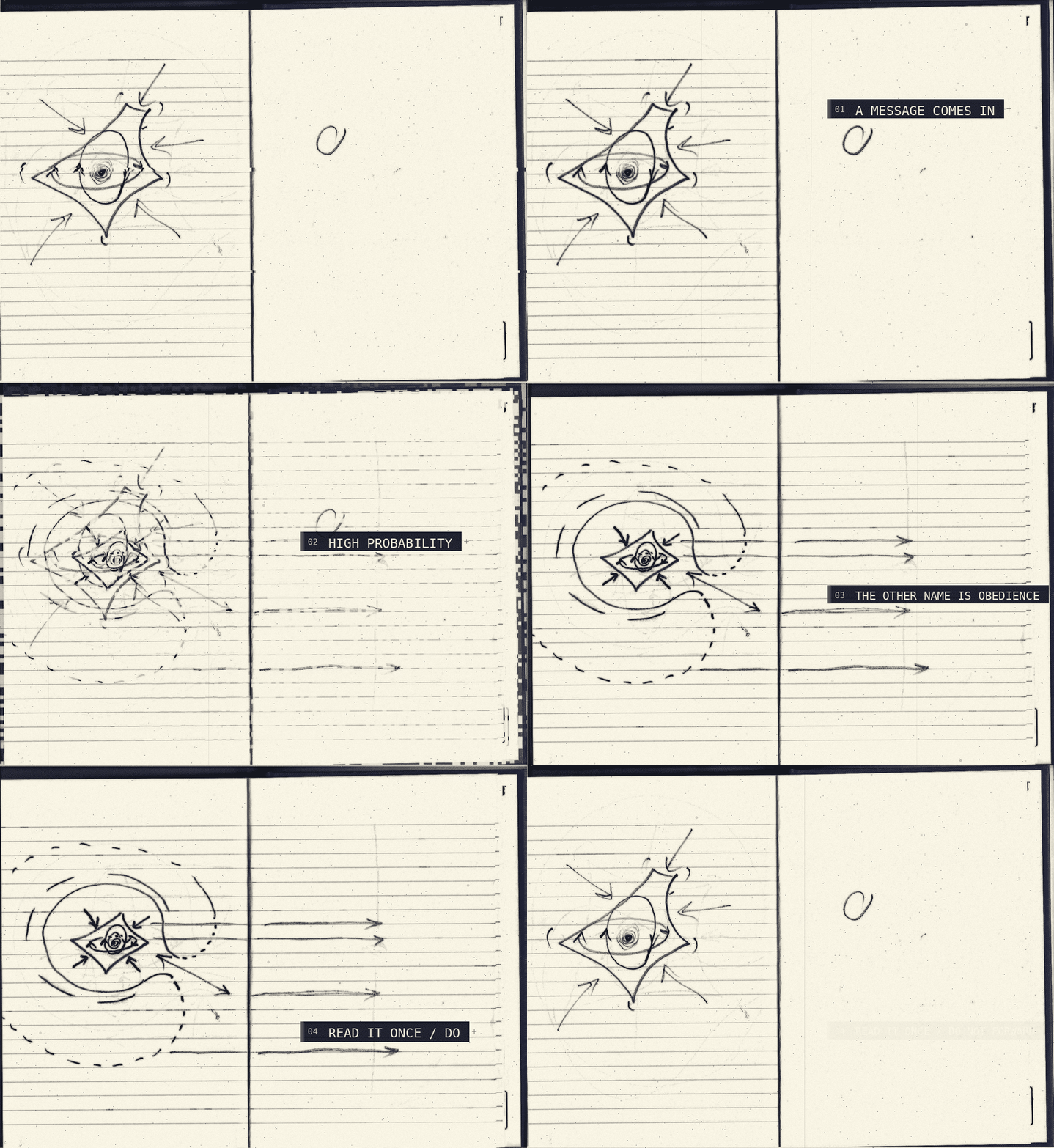
Below, the Iranian state answered with missiles and the language of retaliation and endurance. These forces are not equivalent in power or responsibility. The diagram cannot settle that question. It records a more intimate fact: Iranian counterforce also passes through ordinary life. The people in the middle are made to live where the vectors meet.
Both triangles face downwards. That is how I drew them, though the drawing lies by making them look equal. One marks the closure of space from above. The other marks counterforce from below. Their angles meet in kitchens, petrol stations, group chats, pharmacies, airport roads. The diagram remains abstract until someone checks whether their child’s school will open.
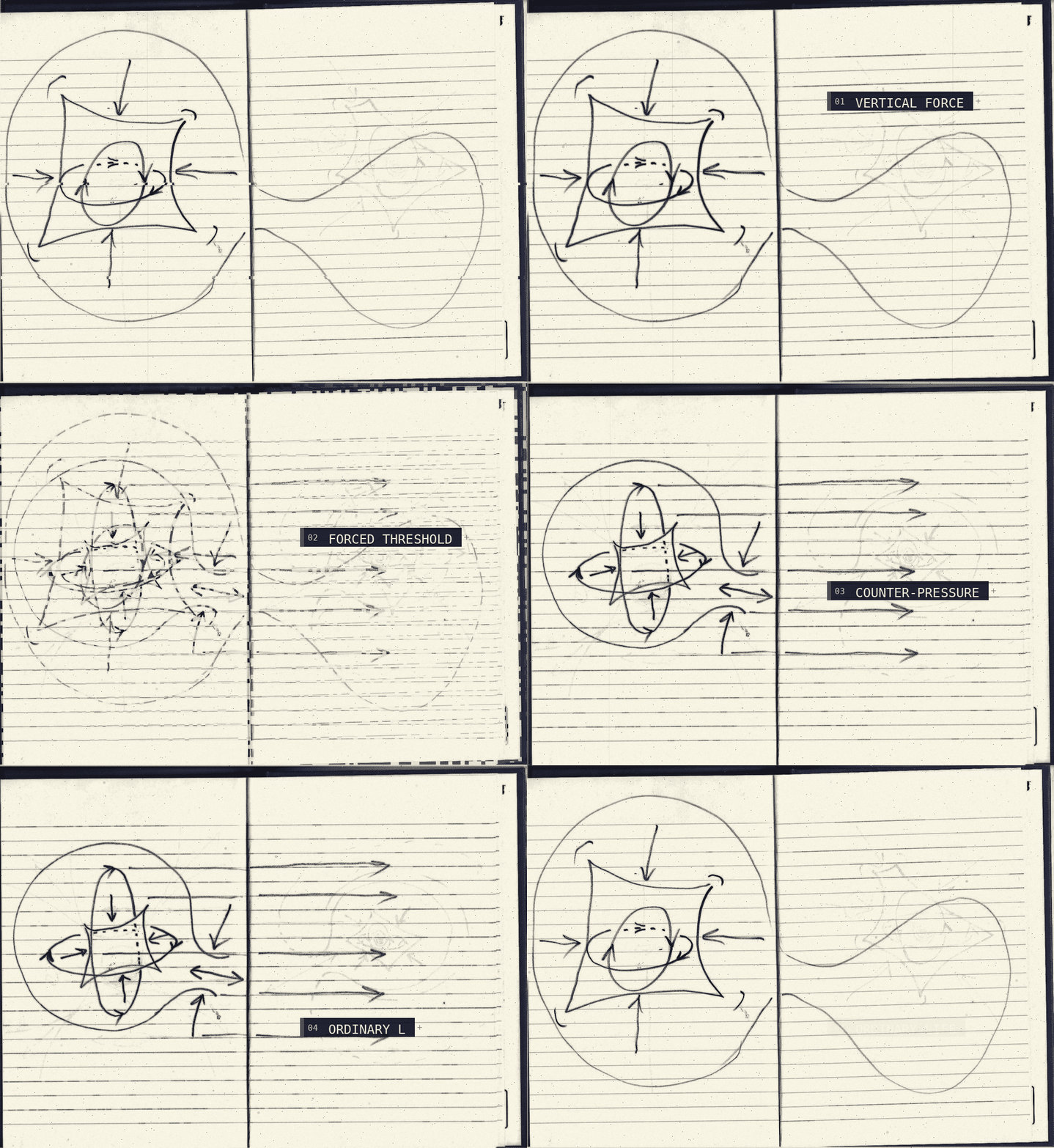
Geopolitics enters the house carrying a charger instead of a flag.
Charge the phone! Keep documents near the door! Check whether the bank card works! Ask whether the road is safe! Call your mother and steady your voice! Refresh a channel you despise because it might be wrong in a useful direction!
A rumour arrives. It has no source – or too many, which is worse. Forwarding has dissolved its origin. It speaks calmly. That calm is obscene. The airspace may close. District X should evacuate. High probability: two words that give gossip the manners of intelligence.
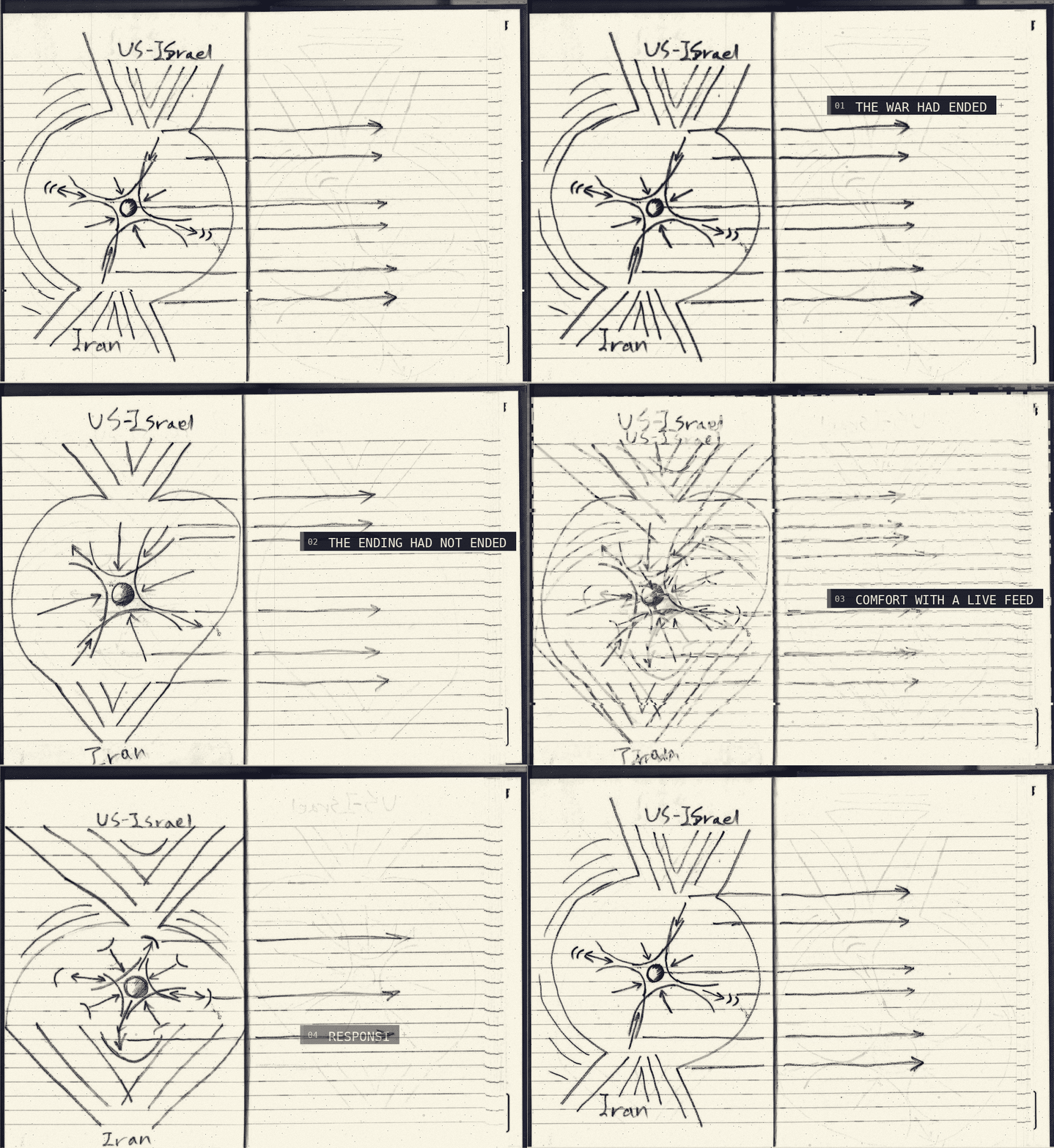
The message may be false. But the obedience it produces, whether from fear or patriotism, is immediately measurable.
Someone fills a tank. Rice disappears from a shelf. A passport leaves the drawer. Shoes wait near the door. A mother is called. A phone reaches 100%. Before truth catches up, the rumour has won a small administrative victory over the day.
And I, from England, participate. This is what disgusts me. I do not even have the dignity of danger. I have comfort with a live feed: working Wi-Fi, bread in the kitchen, a kettle that clicks off obediently. Beside me, my orange cat, Dr Meowssadegh, demands another cube of dried salmon. Outside, the wet road is absurdly peaceful while the phone produces a country at the edge of another catastrophe.
Distance does not remove me from the event. It gives me a cheaper form of suffering, and I resent that cheapness because I still pay with sleepless nights and lost dreams.
Guilt is a slippery little animal. It dresses itself up as seriousness and whispers: suffer properly, forward responsibly, stay awake, become useful through agitation. I distrust it. Guilt wants a role. It wants to stand in the photograph with the injured.
The harder truth is limitation. From here, I cannot protect the people I love. I cannot verify every claim. Nor can I become an emergency service for a place I cannot reach. Fear does not become useful because it’s sincere. Sincerity is often panic with better manners.
Another message arrives: high probability. I read it, then turn the phone face down. I have learned no discipline; my hand wants the screen.
I take out the notebook and draw the diagram again.
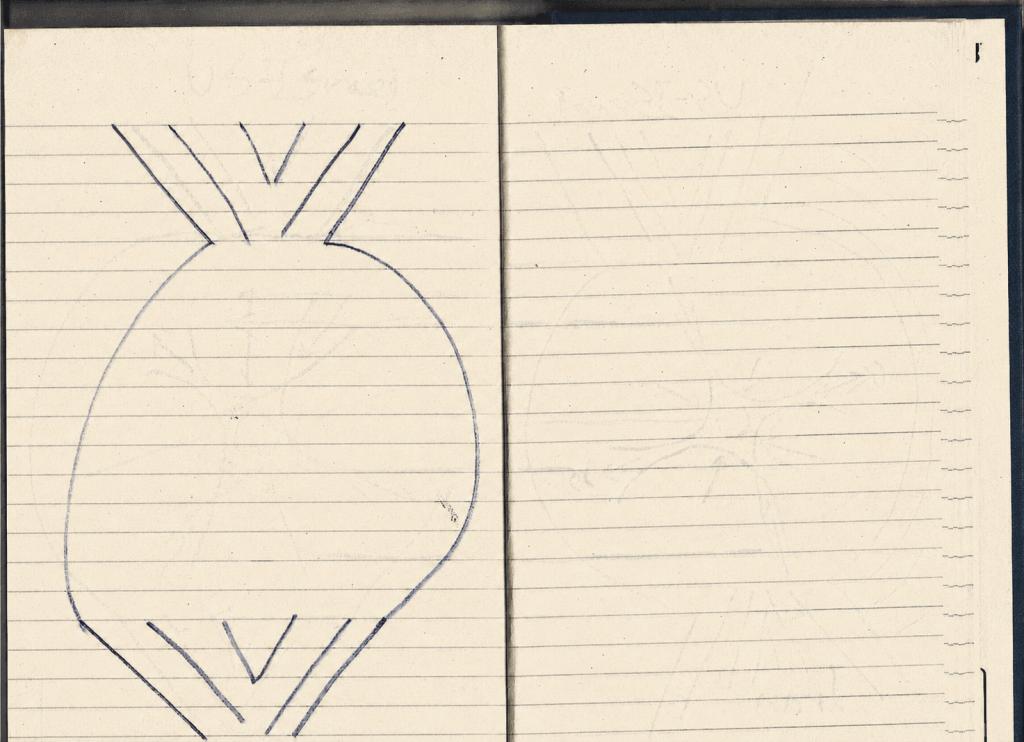
From above: US–Israel. From below: Iran. The triangles narrow towards a small circle. I have drawn this circle many times without naming it. Perhaps I wanted a neutral centre, a place innocent of the forces pressing on it. There is no such place.
I write ‘ORDINARY LIFE’ inside the circle.
The words barely fit. The ‘O’ touches one line; the ‘E’ is cut by another. I press harder, as if pressure could make the centre legible. On the reverse of the page, the letters rise as dents. The next sheet receives them without consent.
The phone lights up again beside my hand. The probability may be high or low. The message may be true, or useful to whoever wants a population to move before it knows why. I do not forward it. I do not congratulate myself.
I add one more arrow, then another. At the point marked ‘ORDINARY LIFE’, the paper gives way.
Parham Ghalamdar is an Iranian artist, writer, and filmmaker based in the UK. His work moves between non-fiction, theory-fiction, video-essay, painting, ceramics, and experimental publishing. He writes about censorship, digital blackout, propaganda, state violence, exile, and the unstable politics of proof.
Recent writing includes Kahrizak, 720×480, an essay on internet shutdowns, morgue interfaces, and the recording of death under conditions of blocked visibility; Hyperstitional Deterrence for ŠUM, co-written with Parsa Esmaeilzadeh, on war, repetition, and algorithmic belief; and Siahkal2.0, a Becoming Press publication combining translation, commentary, AI-assisted simulation, and revolutionary archival material.
His film The Sight is a Wound examines the ethics of seeing after 7 October and stages the burning of fifty paintings as a refusal to aestheticise live-streamed atrocity. Across forms, his work returns to the same pressure: what happens when violence is mediated through screens, archives, rumours, and delayed images, and how displaced subjects remain pulled into events they cannot fully verify or escape.
This piece is made possible by the generous support of the David McClure Trust Fund.
Elhum Shakerifar on The Conference of the Birds and the Global Sumud Flotilla.
Mahtab Grimshaw on food, Iran, and T. S. Eliot

Sana – a pseudonym – writes from Iran.

Mahvash Sabet on how she got her poems out of Evin Prison with the bravery of the women of Iran