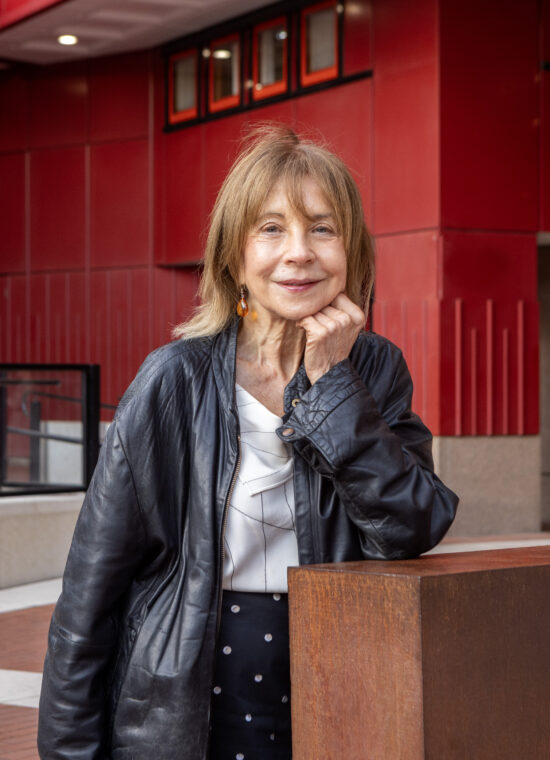
Jacqueline Rose’s PEN Pinter Prize 2026 Speech
Delivered at the British Library.
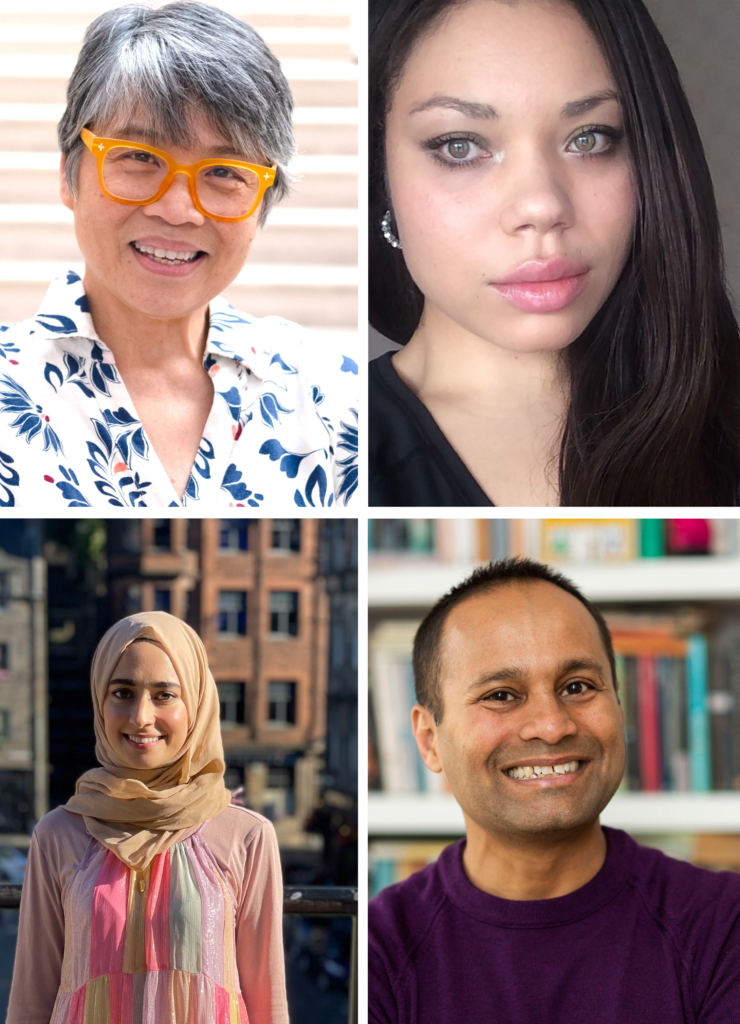
This piece is in partnership with the Jhalak Prize, awards that seek to celebrate books by writers of colour in the UK and Ireland. It is part of a mini-series to mark the 10th anniversary of the prize.
NADIA SAEED: Thank you all for speaking with me today; I know parts of the conversation are going to be difficult, so I want to start off with a light-hearted question: What are your earliest memories of reading as a child, and in what way did they motivate you to start writing for children in particular?
CANDY GOURLAY: I grew up in the Philippines, in the 1960s and 70s. There were very few bookstores then and they were all English-language bookstores. We got our books via door-to-door salesmen who came and sold us digests, anthologies and collections of contemporary publishing in the Western world. Those books were such a magical thing for me – it was like a door to the outside world. When you live in poverty, in a poor third-world country under martial law, where there was a lot of violence, Narnia, Enid Blyton, brownies and fairies were truly magical. They were the good place. Whereas the Philippines seemed a bad place, it was hot and sticky, nobody had money or could travel, and bad things happened there. So, I had a kind of screwed up idea of the world because of those books, in a way, but at the same time, it was an escape.
ALOM SHAHA: Similarly to Candy, I grew up in what would be described as deprived or disadvantaged circumstances. There’s that cliche of ‘books made me’, but books really did show me how to be in the world and were the substitute for the adults in my life. Having said that, one of my clearest memories of reading was with my father: he and I didn’t get on; however, he did introduce me to reading. Like most Bangladeshi immigrants where I lived, we didn’t have any books in the house. My father was one of the few Bangladeshis on the estate who could read and write. I remember him bringing home some kind of ABC book when I was very young, before primary school, and teaching me. I learned to read before I started school and that was down to him – it’s the one thing I remain grateful to him for. Reading and literature were so central to my happiness as a child and have continued to be central to my life. People who are non-readers perhaps don’t understand the extent to which, for people like me, reading is a refuge, something that keeps us safe in a way. For me, that safety was provided by books, by fictional characters, by imaginary worlds.
DANIELLE JAWANDO: I grew up in Manchester on a very working-class estate. I didn’t know any writers, but one thing that my mum made sure to do at an early age was to give me books. There’s a joy in reading, especially when you’re growing up and you feel quite different, like you haven’t quite found your place in the world yet. I feel like books are a safe space, they helped me to feel like I belonged. They played a crucial role in my teenage years when I was having a really difficult time at school. Books were the thing that consistently got me through, and I’d say they saved my life in a way. I remember the first book that I read that had a mixed-race character in it. It was Malorie Blackman’s Thief! I always say that that book had the most instrumental impact on my life because, for the first time, I felt like I mattered enough to be in a story, and that’s stayed with me, all these years later.
HIBA NOOR KHAN: For me, it’s a little bit different. I’m a second-generation British Pakistani. When my maternal grandfather came to the UK, he found a deep passion for Urdu and Farsi literature, so he filled my mum’s childhood home with books. She inherited that obsession, and so I was very fortunate to grow up with books in the house. There was a strong emphasis on reading and I think my earliest memory would be climbing a tree near my auntie’s house; it had a V-shaped branch in the middle, and I used to climb up and sit there. I always had tangerines with me, and I used to read for hours. Similar to Danielle, I also experienced bullying at quite a young age, and reading became this haven, this escape, and a space to step away from what was going on.
NS: The Excluded Voices report from October 2025, which was published by the Inclusive Books for Children, found that only 5.9% of books published in the UK in the last three years featured marginalised main characters, and only half of those were created by authors or illustrators from those groups. This opens a complex conversation about own voices and who gets to write whose stories. I wanted to unpack whether it matters who is telling the story, so long as minoritised stories are being platformed?
AS: I think it’s such a thorny topic, and I don’t know how we disentangle the right of writers to tell whatever stories they want from the fact that there are oppressed and disadvantaged minorities who don’t have a voice in publishing. So, there’s a part of me that thinks anyone should be able to write any story. I’ve read great literature from many different perspectives, but I think untangling the morality of it all is difficult. I think it would all be far easier if people like me felt that the publishing industry really took diversity, equality, and inclusion seriously, and not just tokenistically.
CG: The tricky thing is that fiction is about making things up, and imagining yourself into another person, in another world. But this of course depends on your imagination, on your curiosity crossing any and all boundaries. The problem, to some extent, is not about the creator. The problem is about the publishing industry, about who has the power and the opportunity to tell a story. For those of us who write books, it’s just about good writing. A good writer will question their right to write any story; it’s something I do with every novel. My book, Wild Song, is about indigenous people in the Philippines, a people that I am not a member of. I struggled with this over the years it took me to write Wild Song. Do I really have the right to tell this story I care so much about? I discussed the dilemma with the indigenous people themselves, and I spent years and years researching. But writing the book, I learned that their story was my story, that what happened to them happened to all Filipinos. It was shared history, and I had every right to tell the story. But I didn’t dare write it without doing the work that needed to be done.
DJ: As authors of colour, there is still so much erasure within publishing; from the moment our work is acquired to how it is marketed, reviewed, and questioned. That is why it is important that marginalised authors are given the space and agency to tell their own stories. The problem arises when representation becomes tokenistic, particularly when white authors write underrepresented characters without necessarily engaging with the lived realities and complexities of race, culture, or identity. The same can be said of class. Race and class are not isolated experiences, and for many marginalised writers, they intersect in ways that cannot be reduced to labels.
Writers should be able to write outside of their own experiences, as long as they approach those stories with research and care. But there is still a question of who is given the space to tell those stories within publishing. When white authors write about marginalised characters, their work can sometimes be seen as more acceptable or palatable, while writers of colour are still expected to justify the authenticity of their own experiences. For me, the issue is not simply about who has the right to write a story, but why some voices continue to be given more space than others, particularly when marginalised writers are still fighting to be heard.
AS: I think it’s very easy to focus on just race and gender, but one of the things that has irritated me most is reading works by privileged, middle-class writers, writing about poverty; it seems so deeply inauthentic to me. I grew up in poverty, and it really bothers me when people get the details of what it’s like to be poor, or to be growing up poor, wrong. Obviously, that’s something that could be addressed with research, but I think authenticity, or lack of it, is something that does bother us as readers when we spot it.
HK: I think something that I’ve been irritated by over the last few years especially, as Danielle mentioned, is when elements of identity are used but it’s clear that there’s nothing else to it. It does matter who is telling the story, but there’s the potential to be more damaging than beneficial when things aren’t aligned because, like we’ve all said, the nuance, the complexity, the richness that is the reality of each layer of each dimension of any identity needs to be preserved. It’s impossible to say what is enough or what is a sufficient affinity, or connection, or lived experience, because it’s going to vary. Sincerity is important, but it is not enough.
I experienced this when I was writing my novel about the partition of India. I am South Asian, but I’m British South Asian and I’m Muslim, but I also wrote from Hindu and Sikh perspectives. I was waking up in the middle of the night, constantly questioning myself. I think something that is important is your own willingness to question yourself, to interrogate what you think is sufficient along the way. It’s also something that I grappled with when I was writing Safiyyah’s War. I’m living in this century; I’m not living in World War Two Paris. I physically cannot, and I’m also not French Algerian, so I was questioning if it was okay for me to write this character. The conclusion that I came to was that the primary defining identity element here is being Muslim, which is a shared experience between myself and the character. I did some meaningful research and tried to do justice to all parts of the character’s identity. Having relational respect, as well as real-life connection is important. Ultimately, it’s about the power dynamics and the context into which we’re sending our words, and it’s simultaneously the most important and frustrating thing.
CG: I think in an ideal world, everyone would be writing the voices of anybody, because we don’t want to police people’s imagination. There will be good books, and there will be bad books. But writers of colour live in a historical reality where there has been very little representation in world literature of voices like ours. Unlike white writers whose world is so well represented. They have the freedom to fail; it’s okay to write a bad book. But for us, it’s high stakes and high scrutiny. We’ve got to write really good books. Will my novel be the only Filipino novel published this year in the UK? When my first book came out, I suddenly realised it would be the first Filipino book published in the UK. There’s no body of books that allows us to write bad and good books. We’re always competing with ourselves.
NS: A lot of what you’ve all said speaks into another question that I had around being palatable versus self-censorship, and it made me think about the recent controversy with the US children’s laureate’s comments on didacticism in children’s literature and the quality of the books currently being published. I thought a little bit about what this means for writers of colour in particular; this idea of working to the status quo, being called ‘woke’ whilst trying to educate readers about contexts and experiences that aren’t their own. Do you find you’re self-censoring as a writer of colour, particularly when it comes to making your books ‘palatable’ to mass markets?
CG: When writing for children, it is a priority to consider what the age group you’re writing for can endure. When writing a historical setting, you’re aware that there is death and cruelty, and yet you have to be true to the story or you´ll be doing history (which may already have been buried or rewritten) an injustice. In my novel Bone Talk, for example, the indigenous characters are head hunters. I wondered if I should not mention that I didn’t want my readers to see them as savages because they chopped off the heads of their enemies a hundred years ago. I could see that contemporary members of that community felt shame about the practice. In one museum, the only reference to it was hidden in a basement shelf. But then I began to read widely and realised that the practice was not exclusive to so called primitive societies. One of the most famous head hunters in the world is English – Henry VIII!
So, my advice to other authors is do not shirk from these things. Good writing is about finding ways for children to witness these historical realities without experiencing harm.
I am always thinking about how children engage emotionally with the story. Is it too much? How can I make it true and yet adjusted to their age level? For this I learn so much from the historical fiction for young people written by Catherine Johnson, which is always true, always age appropriate.
DJ: I was a teacher before I started writing and I worked with a lot of young people who had been let down and failed by the system and so many institutions. I always write for those young people, and I think it’s so important for them to see themselves represented on the page. I was born in Moss Side in Manchester on a very large council estate. When you look it up, there’s lots of awful things that are written in the headlines about it, but there’s such a sense of community and love there. I guess, when I write and I set my books in places like Moss Side, I try to challenge ideas and narratives around what being from a council estate and being working class means, whilst also bringing in some northern representation, which we don’t really see that much.
When I was writing my latest book, If My Words Had Wings, there was a case going on in Manchester, where ten young black boys were sent to prison for 120 years for messages in a group chat. It felt important for me to write about the Manchester Ten because it’s the reality for so many black and brown boys but it’s often talked about. Hope is important because young people are not just one thing; they have painful experiences, but they’re so brilliant and bright and hopeful, and there’s so much joy that I experience from their resistance. I try not to tie things up neatly in a bow at the end of my stories because all of these issues are systemic, and it’s not up to a particular young person to change that.
AS: We all interpret text depending on our own kind of prejudices and preconceptions. I think there’s a refusal to acknowledge that we don’t just publish the books we want to publish. A lot of children’s picture books are didactic, because that’s what publishers think parents want. People want to buy books that are going to teach their kids something, so I’ve read a lot of books that have been written because a publisher says, ‘oh, can we have a book about Eid?’ Nobody’s going to argue with the fact that we need books out there for children about Eid and Diwali and all sorts of things. What I think is problematic about a book written solely with that kind of mission is that they’re not very fun to read. One of the things that I see as a children’s picture book reviewer, particularly, is that these books were not written for children. The adult writing them thought they were being clever; the adult in the publishing industry who commissioned it thinks it’s beautiful or clever, but it will bring no joy to children. I think sometimes we forget that there are huge numbers of authors who are just writing what they’re told to write, or just writing things that they think will be commercial.
HK: Books and words enabled me to survive and cope with the world. I couldn’t reconcile the cruelty I saw. Fiction can be a blueprint; your brain is going through the experiences that you’re reading about but from a safe distance, like it’s equipping you to deal with life. I’m sort of inhabiting a bit of a liminal, weird space at this point in my writing career, and there’s a lot of paradoxes and contradictions in who I am, what I want to write, and what I’m allowed to write. I really struggle with this idea of the author as a brand. I’m not a brand, I just love words and literature, and I might want to write something that’s funny because it’s funny, or silly because it’s silly. I find it all at odds with reality. I am passionate about socio-politics, and forgotten histories, and cultural and religious erasure, and human rights, and when I want to write something about that, I want to be free to do so. I want to make change when that desire comes.
On the topic of censorship, I found when entering the middle-grade world that I was subconsciously self-censoring. While writing Safiyyah’s War, I was overly worried about including too much about Safiyyah’s religion thanks to a voice in my head that has probably formed across the course of my lifetime as a British Muslim! It was my wonderful editor from Andersen Press, Eloise Wilson, who gently and nurturingly encouraged me to be true to my own voice and what I deeply and intuitively wanted to write, including when it was explicitly relating to religious tradition. Working with her on the text was a very affirming and transformative experience, and I am forever grateful for it, because the focus was on honouring authenticity and truth rather than palatability.
NS: I wanted to explore the responsibility of being a voice for a specific identity but also wanting to write beyond that. In 2020, when the Jhalak Prize’s YA strand was set up and Black Lives Matter propelled a movement for more inclusion in book publishing, it felt like there was a real wave of change, but in recent years there’s been this backsliding in inclusivity. What do you feel has shifted for the better since then, and what has shifted for the worse?
AS: I think, generally, the industry has shifted for the worse, and it relates to what Hiba mentioned about the author as a brand. You have to have a social media presence; you have to have an existing platform before you even get published. I imagine it makes it even harder for people from disadvantaged and minority communities to get published in the first place. I think these are all negatives for every writer, but I think those negatives impact minority writers more. From my experience in publishing, particularly working with aspiring and new writers, it seems very clear to me that the publishing industry is first and foremost a business. There’s this notion that if you have an existing audience, you are a more attractive writer and it actually has nothing to do with the quality of your writing.
In terms of what’s changed for the better, I do think the Jhalak Prize and similar initiatives have helped to establish that writers of colour can write great literature. It shouldn’t need proving, but I think that that is the good that these prizes have done in the world: to introduce the wider world to the idea that good writing can indeed come from anywhere and from people of any background.
I wasn’t writing 20 years ago, but I know of lots of older authors and I think in the past, one could write a book that was perhaps not very successful, or just moderately successful, but you would have an agent and a publisher who believed in you and you would get a chance to write a second, or a third, or a fourth book, and become a mid-list author. Now, a first-time writer will get a deal and an advance of a few grand, and the publisher hopes, by some kind of magic, that the book will sell. When it doesn’t, it’s your fault or the book wasn’t any good, and that’s just not true. I think we live or die by our sales, and that, to me, is an environment in which you cannot expect writers, particularly those writers from minority and disadvantaged backgrounds, to develop.
DJ: Just to echo what Alom said, we shouldn’t have to prove that good writing exists when you’re an author of colour. I think often in publishing, a book from a writer of colour isn’t seen as literary fiction or commercial. It’s categorised as a black book or a book by a particular author no matter what, and even with marketing, if a Black author writes a Black romance book, they don’t pitch it as a romance book, it doesn’t get sent to romance festivals in the same way a white writer’s book would. I think many of the positive shifts have come from prizes like the Jhalak Prize and Diverse Book Awards, who really showcase authors of colour. The response from bookshops and booksellers, who have displays of Jhalak titles up and down the country, is truly amazing.
I feel like in 2020, there was a lot of buying books from Black authors, but no intentional marketing. And now, even more so, they see marginalised voices as a risk. There’s this idea that Black and Brown people just don’t sell, but we’re not given the same creative marketing that white authors are given. We’re not given the same chance to succeed. So, it has felt like it’s taken a huge step back.
HK: I think one good thing from then to now is that there is visibility for writers of colour. Our books are out there on shelves in libraries and in schools. With the passage of time, things have become more about trends and fads – it sort of waxes and wanes and that’s not meaningful. I do feel, against this backdrop, Sunny and the Jhalak Prize are powering through. Having the Jhalak community is a hugely important and powerful thing.
CG: Many years ago, I was speaking at a school which seemed to be made up mostly of very tall and brusque boys. After I’d said a few words, a boy raised his hand and said, ‘you grew up in America didn’t you?’ He followed me around the school after that, insisting that I couldn’t have grown up in the Philippines. I didn’t fit his idea of what Filipinos sounded like. It was uncomfortable being told that I wasn’t who I said I was, but I hope he came away thinking, there’s more than one kind of Filipino. I might speak about my country, my history and my culture, but Filipinos are multitudes; there is no single Filipino voice. People are multitudes. And maybe that’s what we are representing when we go to schools.
What has shifted for the better or worse? I remember when ‘multiculturalism’ in books was the buzz word shot down by David Cameron’s conservative government. Then came BAME. Then came Diversity. The labels make it clear that it’s an ‘us’ and ‘them’ situation. And awareness seems to move in cycles; round and round we go. But face to face with our readers, it’s just stories. And if stories are good enough, they become part of who the reader is. And the more we tell our stories, the smaller those circles will get.
NS: It’s the National Year of Reading, and a recent National Literature survey showed that more than one in three children said that they are picking up books in their spare time, which is an increase on last year. This is incredibly exciting. What are your hopes for the children you write for and what are your hopes, in terms of your writing, when it comes to the next few years.
AS: One of the privileges of being a children’s writer is going into schools and doing author visits and I think, more than the books themselves, it’s those events that are useful for children to imagine themselves as writers. There are very few male picture-book writers, so I think that’s good for boys I meet. I’ve had lots of wonderful experiences going into primary schools and I think, because I am a schoolteacher too, the way I interact with children makes them feel, perhaps, that writing is something they could do.
I didn’t start writing until I was in my late 30s, and I didn’t dare to think of myself as a writer until after I’d had my first book published. I loved reading, but I thought writing was some kind of magic that only extremely talented and brilliant people could do, and that was really ingrained into me, because reading was so important and every book was holy to me. I never imagined I could be a writer, so what I really love about going into schools is showing the children that any one of them can write.
HK: I’d echo Alom on this. For me, without a doubt the most special and meaningful moments are when I’m face to face with young readers. The impact that our writing has on the public is impossible to quantify or measure, but the glimpses and glimmers you sometimes find in those visits are magic. Having kids ask for advice on ‘finishing their novel’ or ‘how to get published’ is just wonderful! I sometimes receive beautiful letters from much older readers – an 81-year-old lady’s note explaining how my book had changed her mind about so many things sits proudly above my desk.
More broadly though, I really want to see real human reading and writing recognised by and for young people as a powerful form of resistance against absurd digitalisation going around us, and as vital tools in preserving mental health, critical thinking, and creativity, all of which are essential to our functioning as a species! This needs to be an urgent pursuit, a widespread movement.
CG: My hope is that the world will ease the pressures that stop children from reaching for books. The world is a rough place at the moment. I was so inspired by Frank Cottrell Boyce’s final speech as children’s laureate – he showed us how hard it was for many children to access books, and then he introduced us to the people who, via small acts of care, make it possible. We all need to be more like that.
DJ: At the beginning of this year, I was on a panel with one of the young boys who was part of the Manchester Ten trial. His youth worker sent him my book when he was in prison. The main character was getting ready to be released from prison, and he read it whilst his appeal was coming up. He said that, when he saw the main character get released, he had hope that the same would happen to him. That is something that will stay with me forever. He said that he felt like the world thought he was guilty, but reading my book, it made him realise that someone else understood his pain.
When I’m writing, I hope that I make young people feel seen and understood. I won’t be able to do that with every book, but that’s something that I will often think about and try to do. I hope that seeing me and the path I took makes young people realise that being a writer is completely possible for them too.
Candy Gourlay is the Filipino author of a range of books for children and young adults, including Wild Song, a novel featuring indigenous Filipino characters who are put on display in a human zoo in 1904 St Louis, Missouri. The book was shortlisted for the Nero Book Award and Jhalak Prize in the UK, it won the National Children’s Book Award in the Philippines. The German edition won the Euro 10k Gustav Heinemann Peace Prize as well as the Luchs Prize.
Danielle Jawando is an author and screenwriter. Her debut YA novel, And the Stars Were Burning Brightly, won best senior novel in the Great Reads Award, and was shortlisted for the Waterstones Children’s Book Prize, the YA Book Prize, the Jhalak Children’s & YA Prize, the Branford Boase Award and was long-listed for the CILIP Carnegie Medal. Her previous publications include the non-fiction children’s book Maya Angelou (Little Guides to Great Lives), as well as several short plays performed in Manchester and London. Danielle has also worked on Coronation Street as a storyline writer. Her second novel, When Our Worlds Collided, won the 2023 Jhalak Children’s and YA Prize, the YA Book Prize and the 2023 Diverse Book Awards. Her third YA novel, If My Words Had Wings, was published in May 2024and was shortlisted for the YA Book Prize, UKLA Book Awards, Diverse Book Awards, Peter’s Book of the Year, and long-listed for the Carnegie Medal. Her debut middle grade novel, Lostlands, will be published in 2027.
Hiba Noor Khan is a multi-award-winning children’s author. She writes everything from picture books to historical fiction novels, and her books have been translated into over ten languages and received critical acclaim around the world. She is happiest when close to the ocean, or stumbling across bookshops with cafes inside!
Alom Shaha is a dad, teacher, and writer who has dedicated most of his career to sharing his passion for science and education. As well as writing books, such as How to Find a Rainbow and Why Don’t Things Fall Up? Alom has created, written, produced, directed, and appeared in a wide range of science communication and education projects. His portfolio of works ranges from TV series to live science shows to CPD videos for teachers which have been used by teacher training institutions around the world. He makes really good dal.
Delivered at the British Library.

Joanna Elmy on hate, home, and brands.
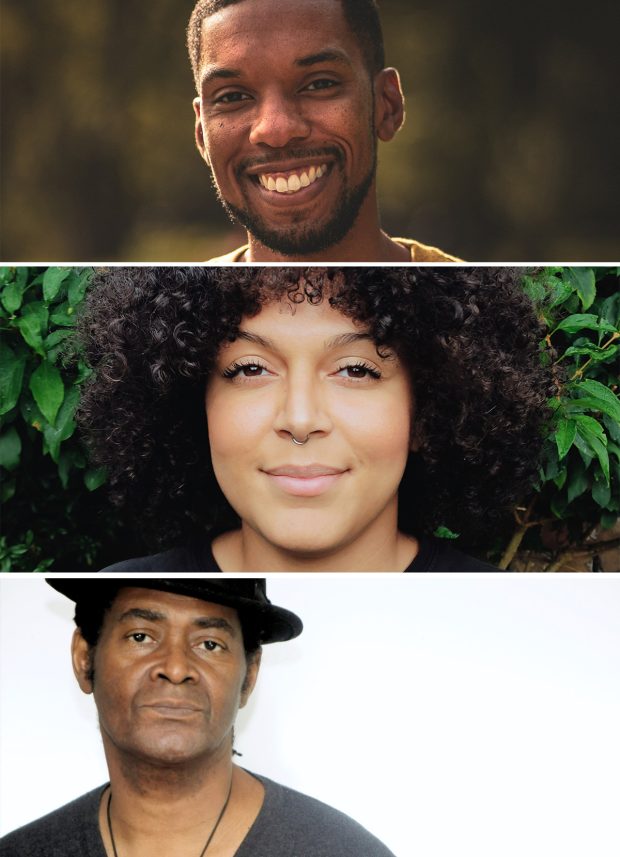
Jacob Ross and Ashley Thorpe in conversation with Heather Marks about intergenerational writing.
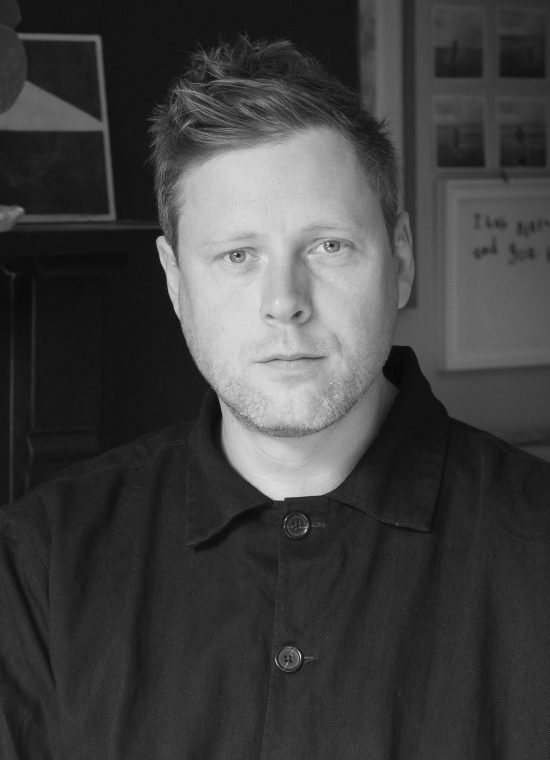
English PEN’s annual PEN Lecture delivered by Max Porter on 29 April 2026.