Author
Syed Imtiaz Ali Taj
Syed Imtiaz Ali Taj
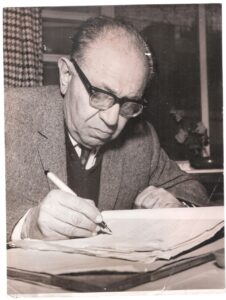
Syed Imtiaz Ali Taj was a writer, editor, and translator from Lahore. He rose to prominence in the early 1930s after publishing Anārkalī, which inspired multiple film adaptations and remains a canonical Urdu work today. A figure whose work traversed many genres, Taj is known for his major contributions to children’s literature, translations from world literature, and his efforts to preserve Urdu’s theatrical heritage. He was murdered in mysterious circumstances in 1970.
Translator
Zain Mian
Zain Mian

Zain R. Mian is a professor and literary translator based in Toronto. He is currently working on a translation of Syed Imtiaz Ali Taj’s Anarkali and a scholarly book on the geographic imagination in Urdu literature. Zain’s scholarly work has been published in The Journal of World Literature and The Oxford Handbook of Modern Indian Literatures. Anarkali is his first book-length translation.
Original language
Urdu
Publishing status
Translation extract
About the book
Share
About the book
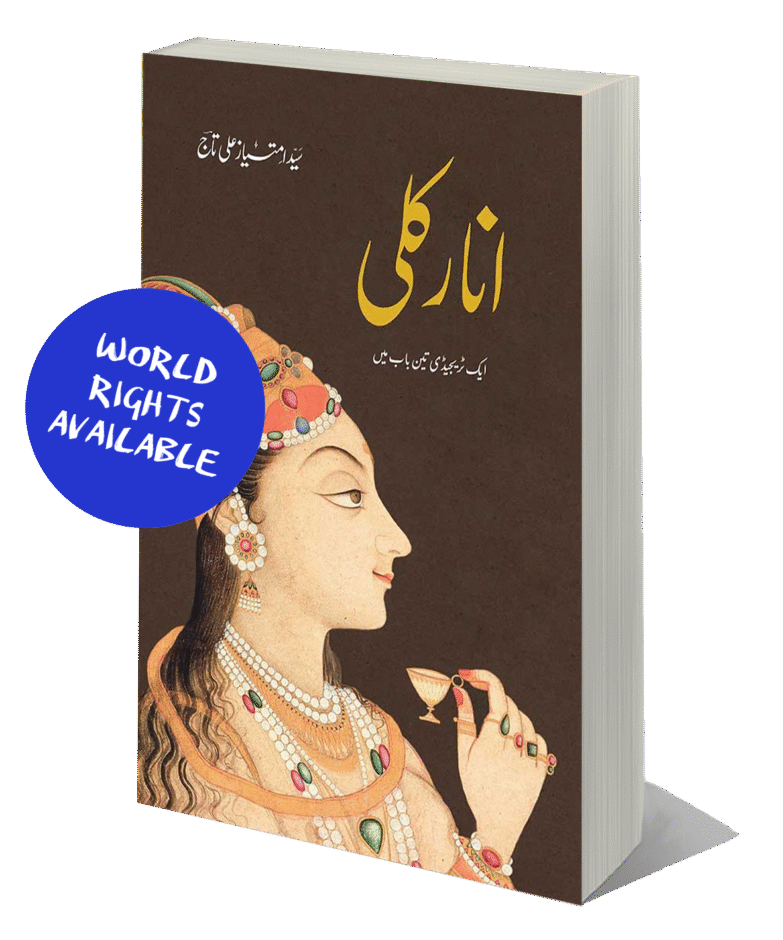
Set in the spring of 1599 at the Mughal palace in Lahore, Anarkali opens with the revelation that Dilaram, a maidservant in the royal harem, is no longer the Emperor’s chosen favourite. During her absence, another girl named Nadira has enamoured the ruler and his son, Prince Salim. The Emperor bestows Nadira with the title of Anarkali (pomegranate blossom) before a raucous audience, while Dilaram is compelled to accept the palace staff no longer respects her. Through the plotting of Dilaram, the play recounts the infamous and tragic love story of Anarkali and the Mughal Prince.
What our readers say
“Imtiyaz Ali Taj’s play Anarkali uses the popular though apocryphal legend of Anarkali, a maid in the Mughal Emperor Akbar’s harem who falls in love with his son, Prince Salim, to illustrate what pursuing one’s heart meant for a vulnerable girl within the potent structures of empire and patriarchy in seventeenth-century Mughal India. Emperor Akbar’s decision to wall up Anarkali as a form of punishment not only threatens his sanity but also breaks the heart of his son, and by the end of the play the audience is left with a question: who really has accepted defeat and incurred a true loss? Anarkali, because she lost her life for love? Prince Salim, because he is now heartbroken and has a strained relationship with his father, the emperor? The emperor himself, who loses a potential heir to his empire? Or the maids and accomplices who help bring Anarkali to her doom?
Zain Main’s excellent translation of the play allows the reader to taste the lyrical and ornate dialogues of the original Urdu while invigorating them with a contemporary English idiom that feels natural and immediate. Anarkali is a powerful exploration of the emotion of love when it threatens the walls of an empire and a conventional society.”
–Ashaq Parray Hussain
Rights available
World English