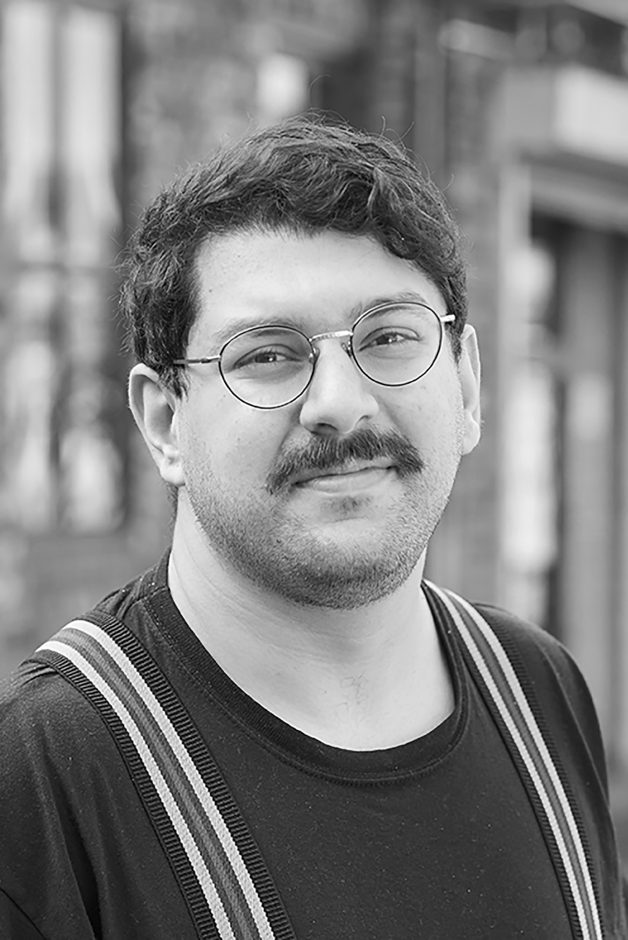
Parham Ghalamdar is an Iranian artist, writer, and filmmaker based in the UK. His work moves between non-fiction, theory-fiction, video-essay, painting, ceramics, and experimental publishing. He writes about censorship, digital blackout, propaganda, state violence, exile, and the unstable politics of proof.
Recent writing includes Kahrizak, 720×480, an essay on internet shutdowns, morgue interfaces, and the recording of death under conditions of blocked visibility; Hyperstitional Deterrence for ŠUM, co-written with Parsa Esmaeilzadeh, on war, repetition, and algorithmic belief; and Siahkal2.0, a Becoming Press publication combining translation, commentary, AI-assisted simulation, and revolutionary archival material.
His film The Sight is a Wound examines the ethics of seeing after 7 October and stages the burning of fifty paintings as a refusal to aestheticise live-streamed atrocity. Across forms, his work returns to the same pressure: what happens when violence is mediated through screens, archives, rumours, and delayed images, and how displaced subjects remain pulled into events they cannot fully verify or escape.
Parham participated in English PEN’s pilot series of short-term micro residencies for writers experiencing displacement here in the UK.
The English PEN residency gave me something rare: time to think inside difficult material without being rushed by the same panic I was trying to write about. It allowed me to work on a personal essay about war, rumour, waiting, and displacement with more care and precision. The residency also made the work feel less isolated. Being supported by English PEN and hosted in a serious cultural environment helped me understand the text not just as a private response to crisis, but more as a piece of writing that could enter public conversation without flattening its difficulty.